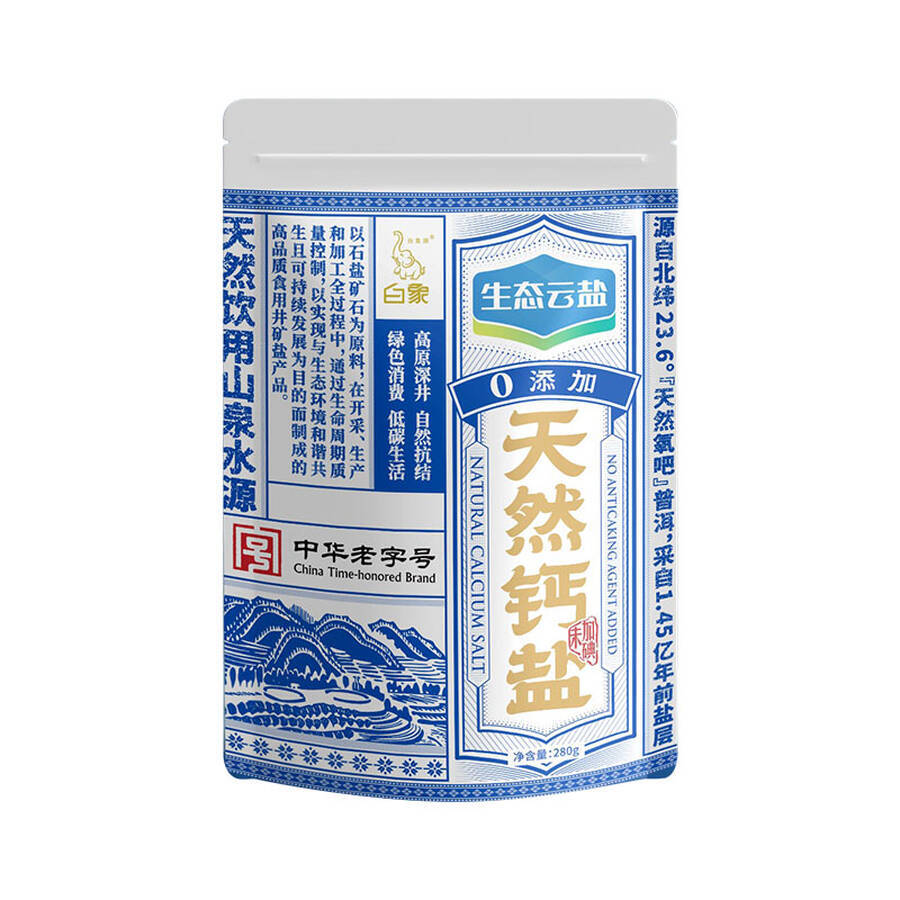
Natural Calcium Salt - Iodine-Free
Pure Flavor Natural Calcium Salt Iodine Free
Product Name: Natural Calcium Salt - Iodine-Free
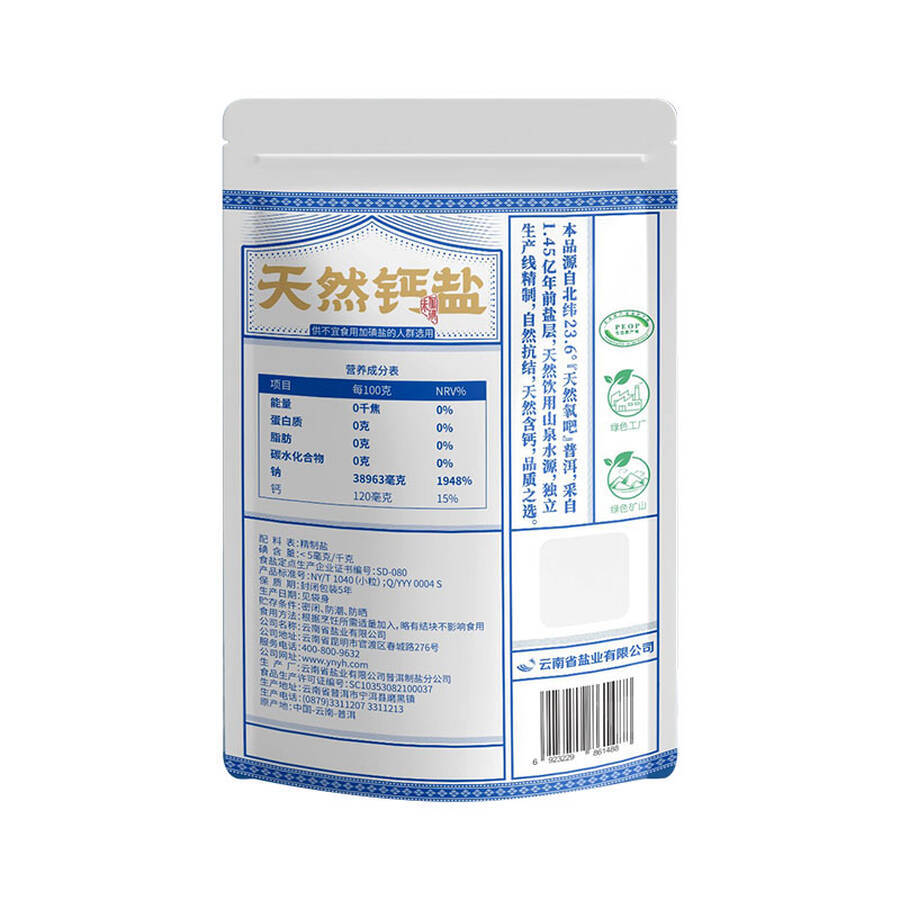
Ingredients: Refined salt
Iodine content: <5mg/kg
Storage conditions: Keep tightly sealed, protect from moisture and sunlight
Shelf Life: 5 years when sealed
Manufacturing Address: Mohei Town, Ning'er County, Pu'er City, Yunnan Province
CERTIFICATES
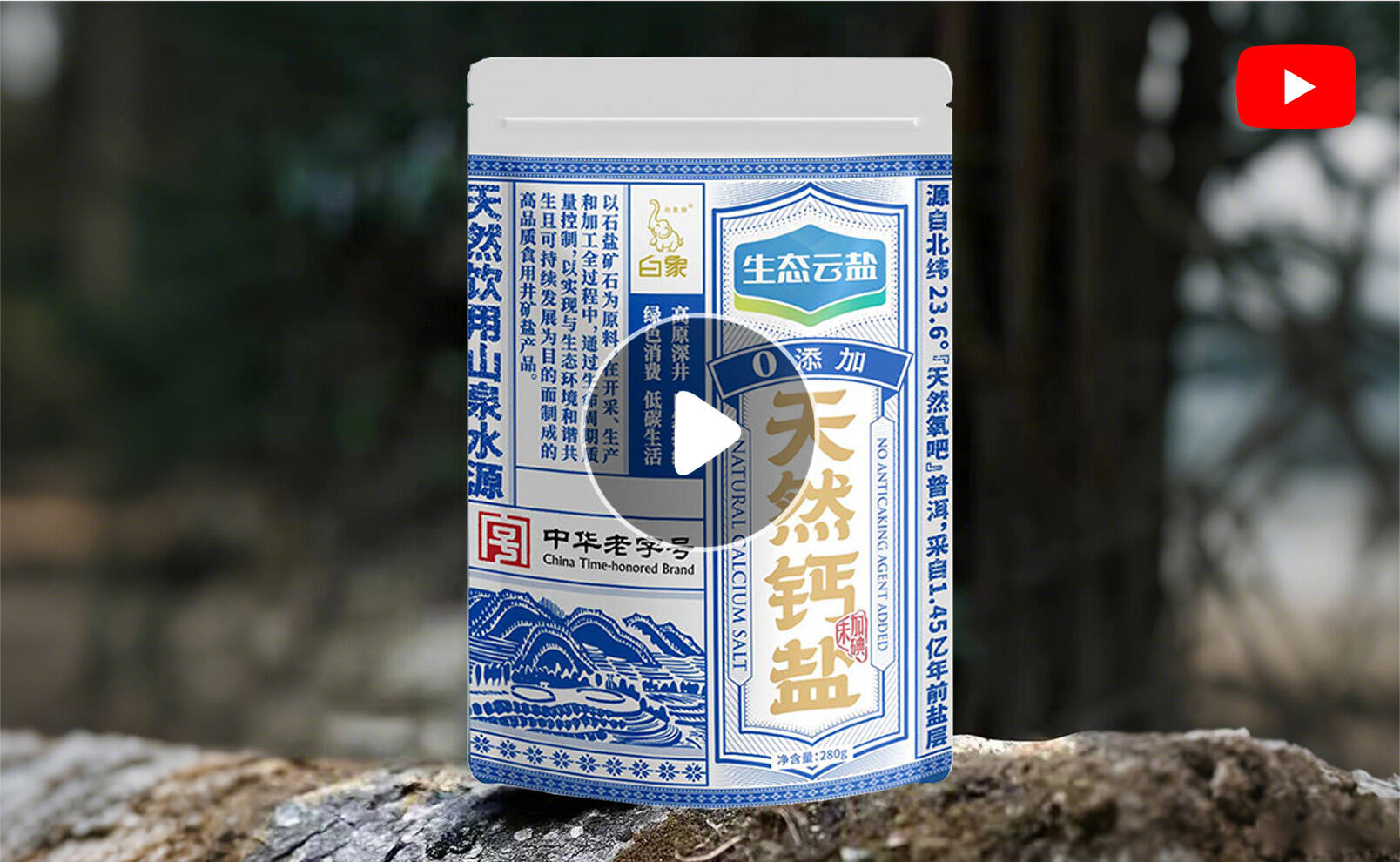
Pure Flavor Natural Calcium Salt Iodine Free
When iodine fortification is removed from salt formulations, natural calcium salts revert. They become pure carriers of geological mineral flavors. These salts are sourced from rock salt deposits that naturally coexist with calcium‑rich minerals — such as gypsum and calcite. Through physical crushing and screening, artificial additives are eliminated. At the same time, calcium particles crystallized alongside sodium are fully preserved. This mineral composition originates from ancient sedimentary layers. It imparts a gentle layering of saltiness — accompanied by a subtle, rock‑derived aftertaste.
It does not fulfill public health fortification mandates. It exists solely for specific requirements — such as medical prescriptions for thyroid patients or iodine‑free diets — or for pure flavor exploration. In professional kitchens requiring precise seasoning, or in dietary scenarios necessitating avoidance of artificial iodine sources, this salt offers the purest expression of its mineral origins. It delivers fundamental saltiness alongside natural calcium veins derived from geological structures. Thus, it functions both as a seasoning and as a grindable micro‑sample — exploring flavor and mineralogy.
Nutrition Facts Table
| Item | Per 100g | NRV% |
| Energy | 0 kJ | 0% |
| Protein | 0 g | 0% |
| Fat | 0 g | 0% |
| Carbohydrate | 0 g | 0% |
| Sodium | 38963mg | 1948% |
| Calcium | 120mg | 15% |
Advantages
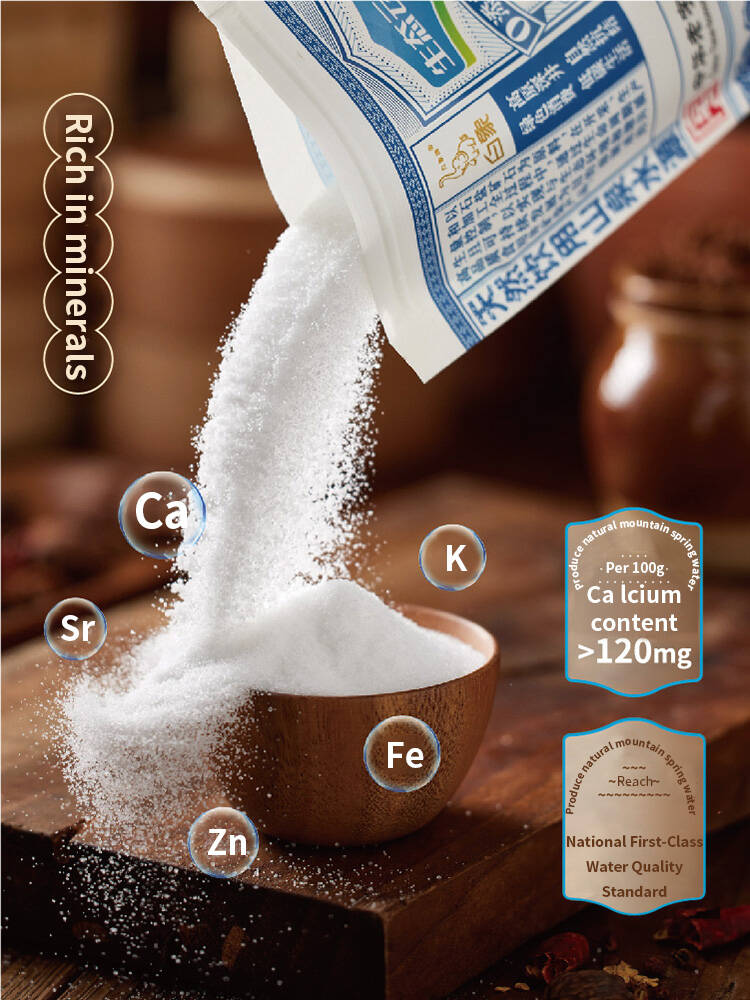
- No anti-caking agents added
- Mountain spring water salt
Made with natural mountain spring water meeting national Class I water quality standards - Calcium content > 120mg
Special process preserves native calcium ions
Characteristics
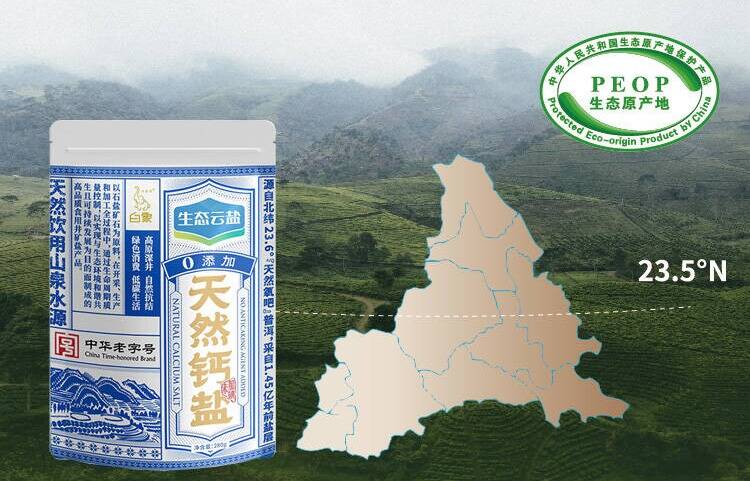
Pure and natural, far from pollution
Highland rock salt from the Tropic of Cancer
Forest coverage >70%
2,100 meters underground, unique highland rock salt from the Cretaceous period
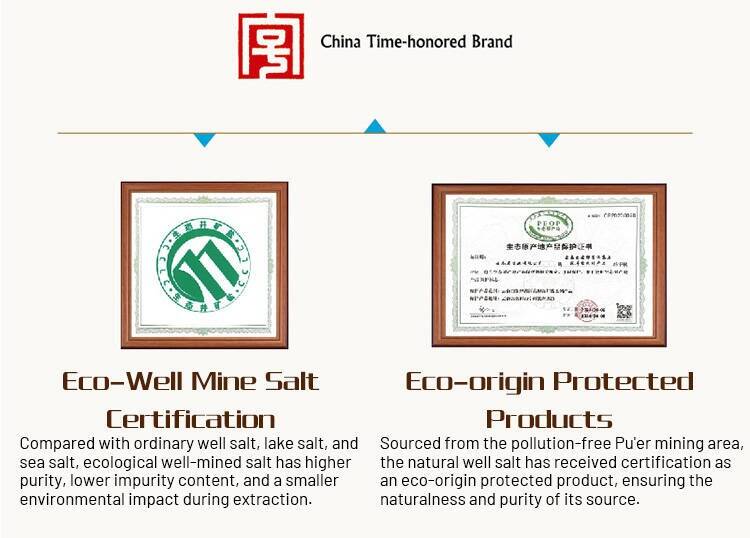
Authoritative Certification
We possess comprehensive testing reports and hold world-class and national-level authoritative certifications. As a long-established brand with years of experience, we are trustworthy.
Mechanically Processed to Ensure Purity
We employ a fully automated, touch-free process that rigorously minimizes the risk of contamination throughout production, guaranteeing the inherent quality of our product.

FAQ
Q1: What is non‑iodized natural calcium salt?
A1: This is a specialty salt that does not contain added iodine fortifiers. However, it retains the natural calcium content present in the raw material.
Non‑iodized: No potassium iodate or potassium iodide is added during production.
Natural calcium: Its calcium originates from naturally occurring calcium‑containing minerals — such as gypsum and calcite. These minerals are found in the rock salt deposits used for production and are preserved through physical methods.
Q2: How does it differ from iodized natural calcium salt?
A2: The sole core difference lies in iodine addition.
Non‑iodized version: Contains no artificially added iodine. It is suitable for specific populations or dietary requirements that necessitate restricted iodine intake.
Iodized version: Retains natural calcium while adding iodine fortifiers — to prevent iodine deficiency disorders.
Both share the same “natural calcium” source and base salt composition.
Q3: Who needs or is suitable for this salt?
A3: Primarily intended for specific groups. Generally healthy individuals are not advised to actively choose it.
Those medically required to restrict iodine intake — primary group: For example, hyperthyroidism (Graves' disease) patients, certain thyroiditis patients, or others with conditions requiring strict iodine control. Must be used under explicit physician guidance.
Residents in high‑iodine areas: Individuals whose daily iodine intake is already sufficient.
Those seeking specific flavors or natural diets: Professional chefs or consumers with stringent food‑ingredient requirements — for dishes requiring avoidance of artificially added iodine.
Q4: Can consuming it effectively supplement calcium?
A4: The effect is very limited. It cannot serve as the primary calcium supplementation method.
Content limitations: The daily recommended salt intake is very low — under 5 grams. Even with relatively high calcium content, total calcium intake via this route remains far below the daily recommended amount. For adults, this is approximately 800 mg.
Absorption efficiency: Calcium in its natural mineral form — e.g., calcium sulfate — is typically less bioavailable than calcium from synthetic supplements.
Conclusion: It provides only an extremely minor dietary calcium supplement. It absolutely cannot replace calcium‑rich foods — like dairy, soy products, leafy greens — or proper calcium supplements.
Q5: Can ordinary people use it to control sodium intake?
A5: This is a misconception. “Sodium control” refers to reducing sodium chloride intake. Non‑iodized natural calcium salts contain nearly identical sodium levels to regular salt. For sodium control, choose “low‑sodium salt” — which substitutes potassium chloride for part of the sodium chloride — and strictly limit total usage.
Q6: What precautions apply?
A6:
Clarify its primary purpose: It serves those with “no iodine requirements” — not as an efficient “calcium supplement.”
Control total intake: Strictly adhere to daily salt intake recommendations — under 5 grams. Do not consume more salt for “calcium supplementation.”
Flavor perception: Its saltiness may be milder or have subtle nuances. This results from natural minerals and differs slightly from the pure saltiness of refined salt.
Q7: How should it be stored?
A7: Like all salts — store in a sealed container, away from light, in a cool, dry place.
Q8: Can long‑term consumption cause iodine deficiency?
A8: For individuals whose primary iodine source is iodized salt, switching entirely to non‑iodized salt may pose a long‑term risk. Without adequate iodine from other sources — like seaweed, seafood, eggs, or dairy — iodine deficiency can occur. This impacts thyroid health and children's cognitive development.
Q9: Is it more “natural” or healthier than regular salt?
A9: This requires a rational perspective:
“Natural” meaning: Its “natural” status specifically refers to calcium content and the absence of added iodine. It does not imply the product is safer or more nutritious overall.
Health positioning: For specific groups requiring it — e.g., hyperthyroidism patients — it serves as an appropriate “iodine‑free” option. However, for the general population without iodine‑restriction needs, its use may introduce iodine deficiency risks. This could harm health.
Summary: This is a functional niche product. Its “healthiness” entirely depends on whether the user aligns with its intended functional purpose.