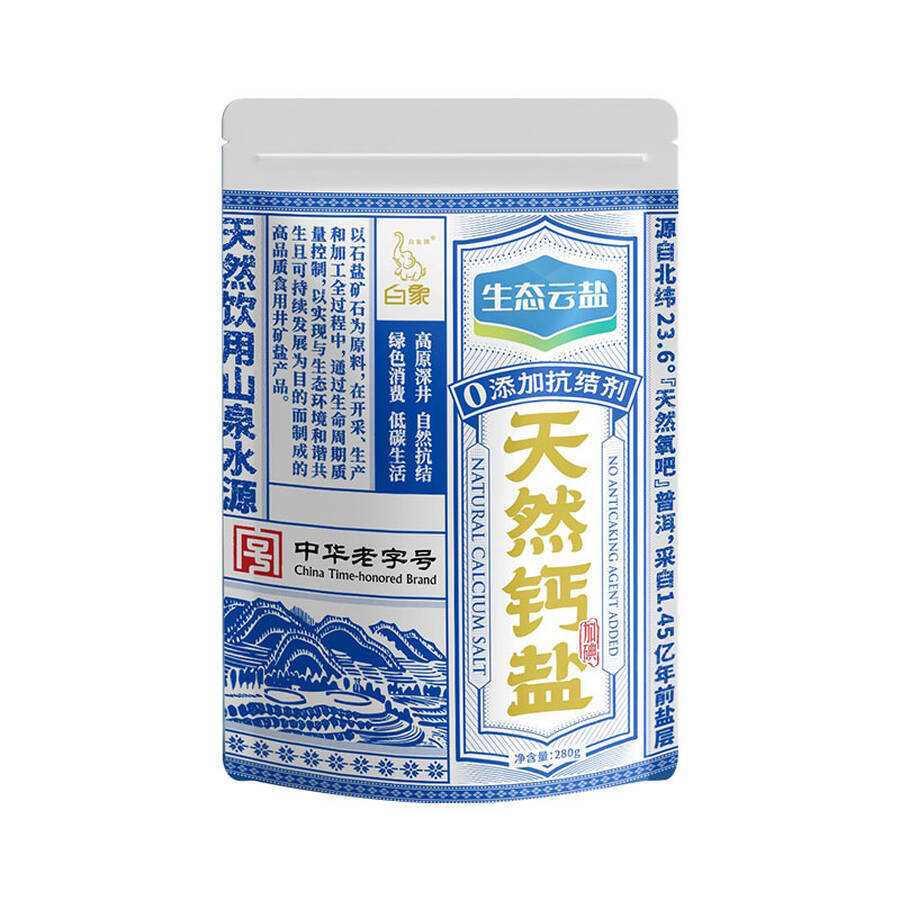
Natural Calcium Salt - Iodized
Factory Price Natural Calcium Chloride Iodized
Product Name: Natural Calcium Salt - Iodized
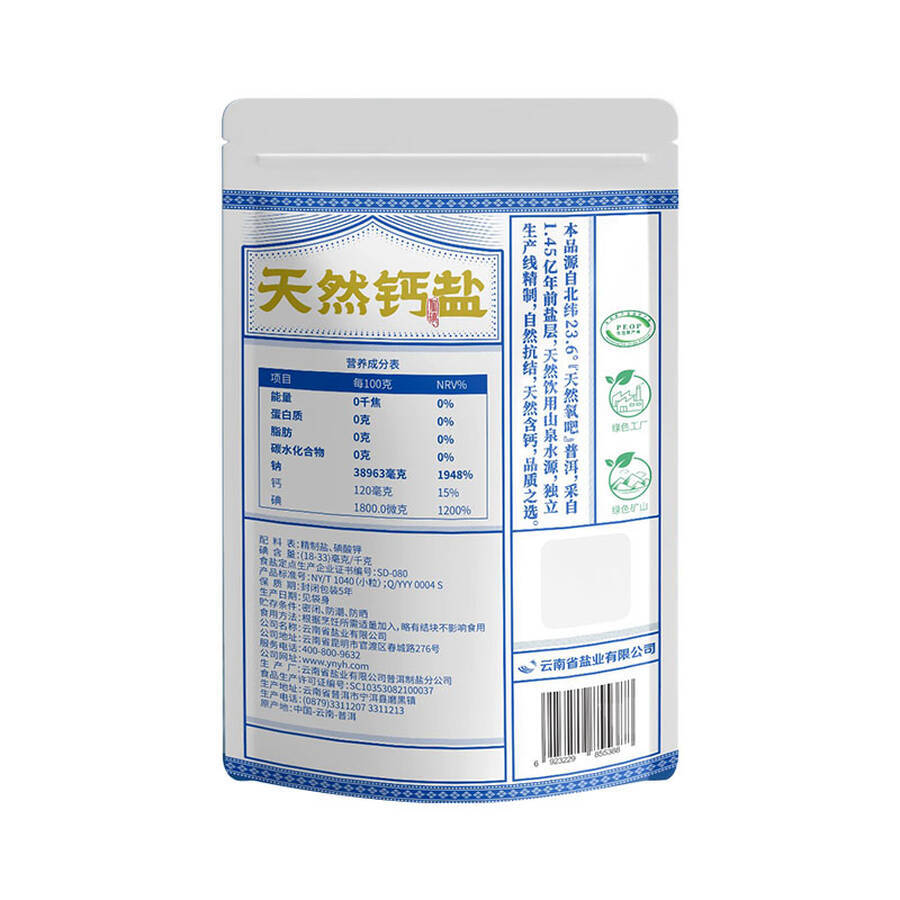
Ingredients: Refined salt, potassium iodate
Iodine content: (18-33) mg/kg
Storage conditions: Keep tightly sealed, protect from moisture and sunlight
Shelf Life: 5 years when sealed
Manufacturing Address: Mohei Town, Ning'er County, Pu'er City, Yunnan Province
CERTIFICATES
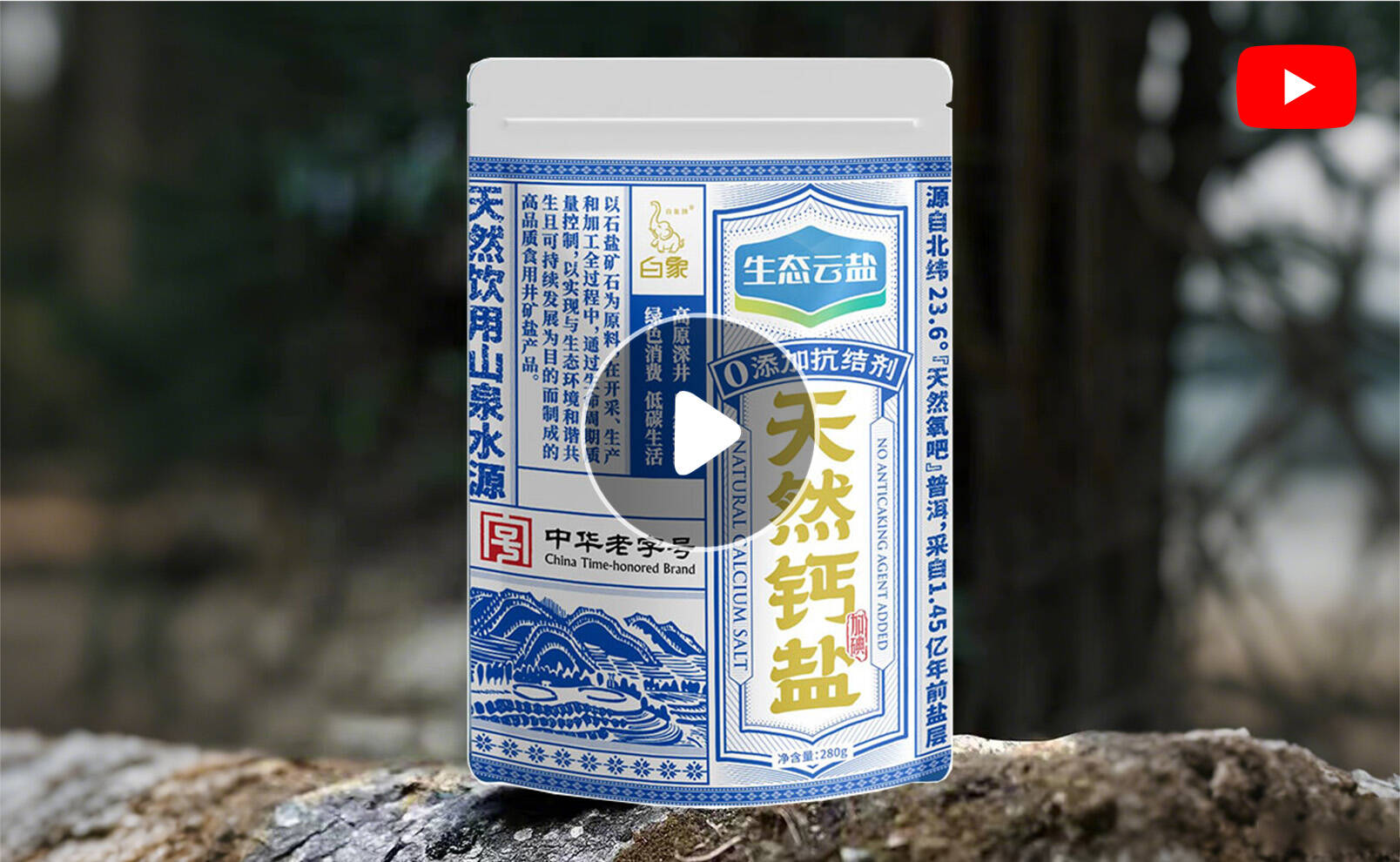
Natural Calcium Salt - Iodized
When ancient rock salt deposits are naturally rich in primary calcium minerals, this unique dual‑nutritional‑value salt emerges — iodized natural calcium salt. Its salt body is not composed solely of pure white sodium chloride crystals. Instead, it coexists with minerals like gypsum (calcium sulfate) and calcite — a result of geological sedimentation. After physical crushing and screening, naturally formed calcium salt particles are retained. During production, while these natural calcium compounds are preserved, a potassium iodate solution is precisely sprayed according to public nutrition standards. This achieves a combination of “natural calcium” and “fortified iodine” within a single carrier.
This approach offers distinct pathways for mineral acquisition. Calcium exists in its naturally coexisting physical form — potentially imparting a milder saltiness and subtle mineral notes. Iodine is added in a modern, nutritionally fortified standard form — ensuring efficacy in preventing deficiency diseases. From middle‑aged and elderly individuals needing simultaneous attention to bone health and iodine nutrition, to cooks pursuing natural food forms, this salt employs a “geologically native + scientifically fortified” compound formula. It aims to gently supplement two key minerals while seasoning food.
Nutrition Facts Table
| Item | Per 100g | NRV% |
| Energy | 0 kJ | 0% |
| Protein | 0 g | 0% |
| Fat | 0 g | 0% |
| Carbohydrate | 0 g | 0% |
| Sodium | 38963mg | 1948% |
| Calcium | 120mg | 15% |
| Iodine | 1800.0 µg | 1200% |
Advantages
- No anti-caking agents added
- Mountain spring water salt
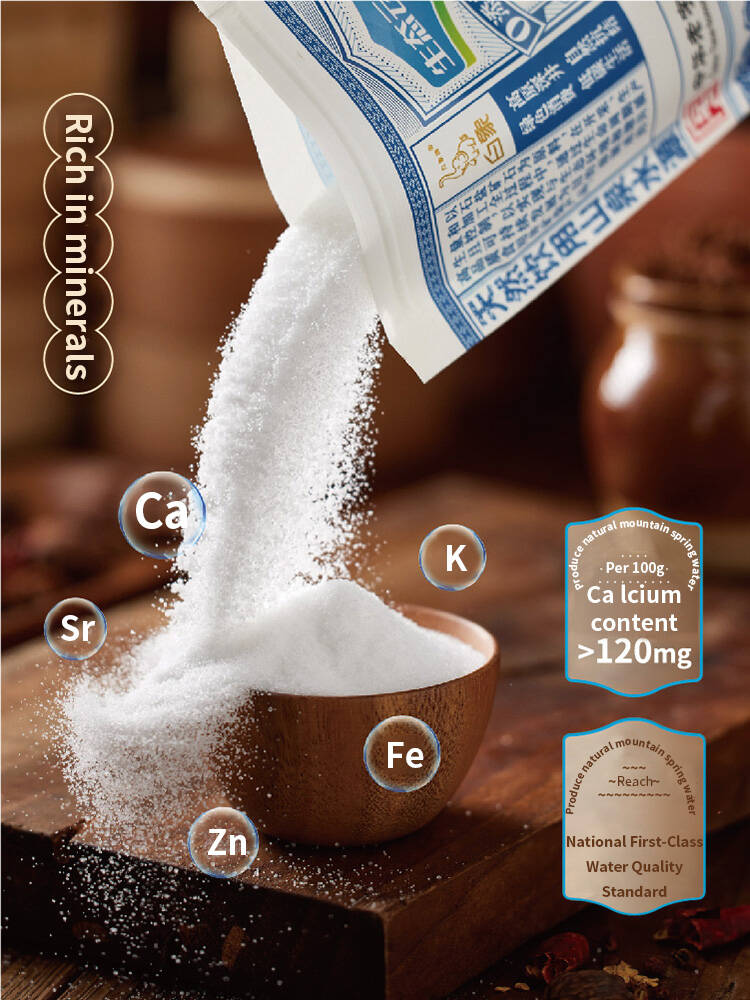
Made with natural mountain spring water meeting national Class I water quality standards - Calcium content > 120mg
Special process preserves native calcium ions
Characteristics
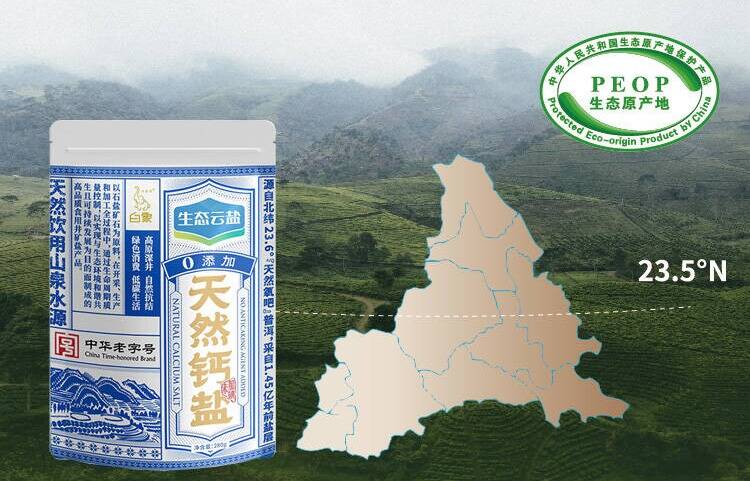
Pure and natural, far from pollution
Highland rock salt from the Tropic of Cancer
Forest coverage >70%
2,100 meters underground, unique highland rock salt from the Cretaceous period
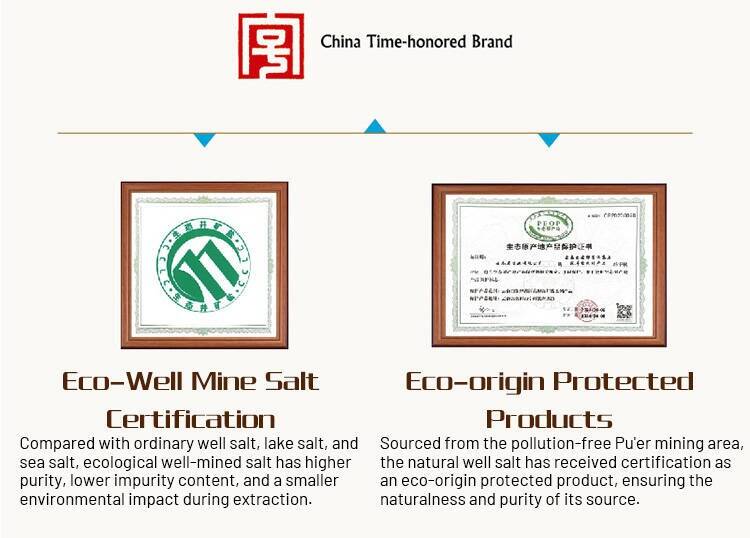
Authoritative Certification
We possess comprehensive testing reports and hold world-class and national-level authoritative certifications. As a long-established brand with years of experience, we are trustworthy.
Mechanically Processed to Ensure Purity
We employ a fully automated, touch-free process that rigorously minimizes the risk of contamination throughout production, guaranteeing the inherent quality of our product.

FAQ
Q1: What is Iodized Natural Calcium Salt?
A1: Iodized Natural Calcium Salt is a functional salt. It combines natural calcium sources with iodine fortification.
Natural Calcium: Its calcium originates from the salt production raw material itself. Specifically, it comes from naturally occurring calcium‑containing minerals — such as gypsum and calcite — found in mined rock salt deposits. During processing, specific physical methods preserve or enrich this calcium content.
Iodization: Simultaneously, in compliance with national iodized salt standards, an iodine fortifier is artificially added. This involves potassium iodate — to prevent iodine deficiency disorders.
Q2: How does it differ from regular iodized salt and chemically calcium‑fortified salt?
A2: The core distinction lies in the source and form of calcium.
| Comparison Item | Iodized Natural Calcium Salt | Regular Iodized Salt | Chemically Calcium‑Fortified Salt |
|---|---|---|---|
| Calcium Source | Naturally occurring minerals in raw materials (e.g., gypsum). | Virtually no calcium. | Artificially added organic or inorganic calcium compounds (e.g., calcium lactate, calcium carbonate). |
| Calcium Form | Calcium exists in natural mineral forms (e.g., calcium sulfate). | None. | Calcium exists as highly pure soluble compounds. |
| Core Function | Supplements iodine + provides calcium from natural sources. | Supplements iodine. | Supplements iodine + efficiently supplements specific calcium compounds. |
Q3: Can consuming this salt supplement calcium? How effective?
A3: It can provide some calcium, but the effect is very limited. It should not be relied upon as the primary calcium supplement.
Content Limitations: Salt intake itself is strictly limited — daily under 5 grams. Even with relatively high calcium content, total calcium intake from salt remains far below the daily recommended intake. For adults, this is approximately 800 mg.
Absorption Considerations: Calcium in natural mineral forms — such as calcium sulfate — typically has lower bioavailability. Its human absorption efficiency is lower than that of artificially added calcium supplements, like calcium citrate.
Conclusion: It can serve as a supplementary dietary calcium source. However, preventing and treating conditions like osteoporosis still requires relying on calcium‑rich foods — such as dairy, soy products, and leafy greens — along with calcium supplements when necessary.
Q4: Who is it suitable for?
A4:
Individuals needing to monitor both iodine and calcium intake: Middle‑aged and elderly adults who consume insufficient dairy daily and require iodized salt.
Those seeking natural mineral diets: Consumers who prefer minerals in their natural food forms.
Important notes: Similarly, individuals with thyroid conditions should choose iodized or non‑iodized versions based on medical advice. Those with renal insufficiency or hypercalcemia should exercise caution.
Q5: What precautions apply?
A5:
Cannot replace regular calcium supplementation: Never reduce intake of calcium‑rich foods or discontinue doctor‑prescribed calcium supplements solely because of this salt.
Control total salt intake: The core principle remains salt restriction — under 5g daily. Do not increase salt consumption for “calcium supplementation.” The risk of excessive sodium intake far outweighs the limited calcium benefits.
Flavor may differ: Natural calcium salts may impart a milder or slightly mineral‑tinged saltiness. This differs slightly from pure sodium chloride.
Q6: How should it be used?
A6:
Usage: Use as regular table salt for daily cooking. Add near the end of cooking to minimize iodine loss.
Positioning: It is more appropriate to view it as a “specialty seasoning salt with added nutritional value” — not as a pure nutritional supplement.
Q7: How should it be stored?
A7: Like all salts — store in an airtight container, away from light, in a cool, dry place. This maintains the stability of iodine and minerals.
Q8: Is it healthier than regular salt?
A8: It can be understood as a “nutritionally enhanced” salt option, but should be viewed rationally:
Advantages: Provides additional natural calcium and stable iodine — while delivering the same sodium intake as regular salt.
Limitations: Supplementation levels are limited, and it typically costs more than regular salt.
Core Principle: The key to health remains strict control of total salt intake. Nutritional optimization only becomes meaningful on this foundation.
Q9: Is it suitable for everyone?
A9: No.
Individuals with specific medical conditions — requiring restricted iodine or calcium intake — must consult a doctor before selection. Examples include certain thyroid disorders, kidney stones, or hypercalcemia. They may need to use non‑iodized regular salt.
For generally healthy individuals with balanced diets and no confirmed calcium deficiency, consuming regular iodized salt — while controlling intake — is sufficient.