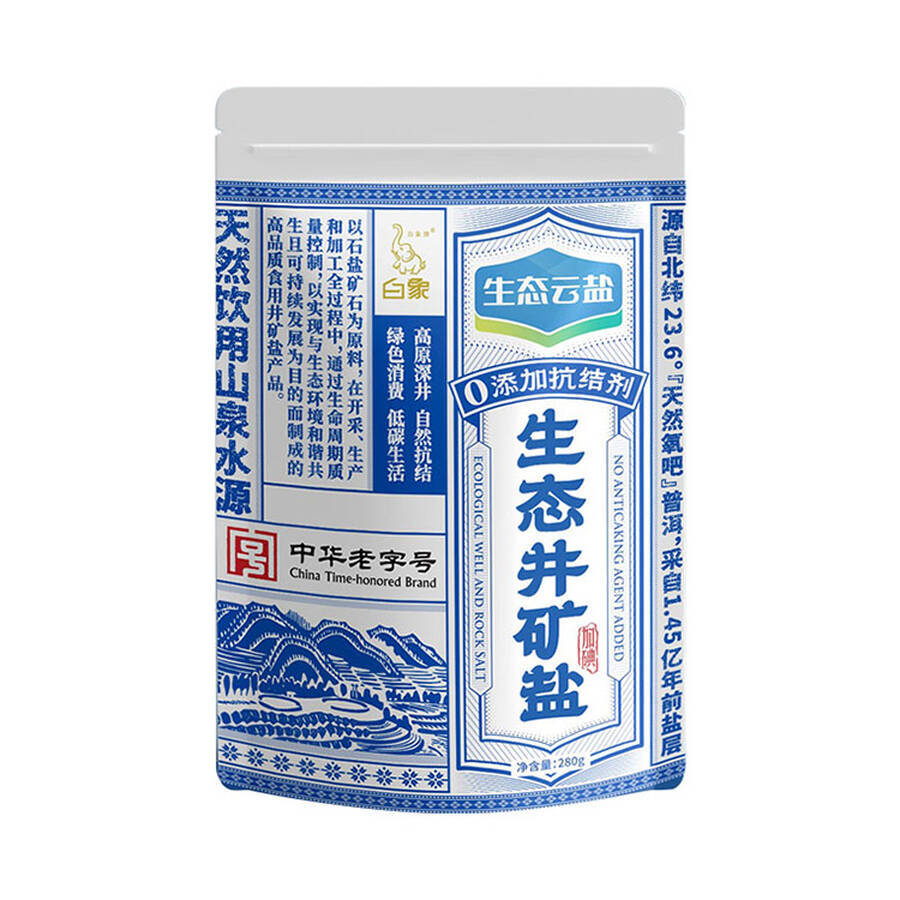
Ecological Well Mineral Salt - Iodized
Best Selling Ecological Well Mineral Salt Iodized
Product Name: Ecological Well Mineral Salt - Iodized
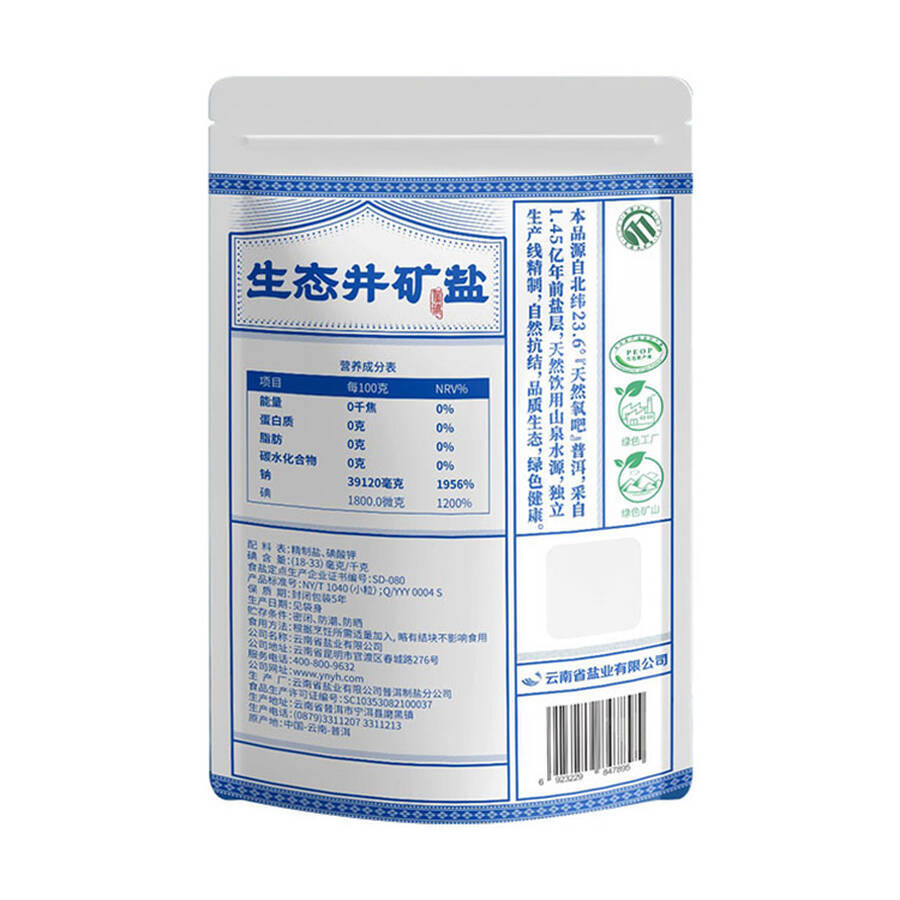
Ingredients: Refined salt, potassium iodate
Iodine content: (18-33) mg/kg
Storage conditions: Keep tightly sealed, protect from moisture and sunlight
Shelf Life: 5 years when sealed
Manufacturing Address: Mohei Town, Ning'er County, Pu'er City, Yunnan Province
CERTIFICATES
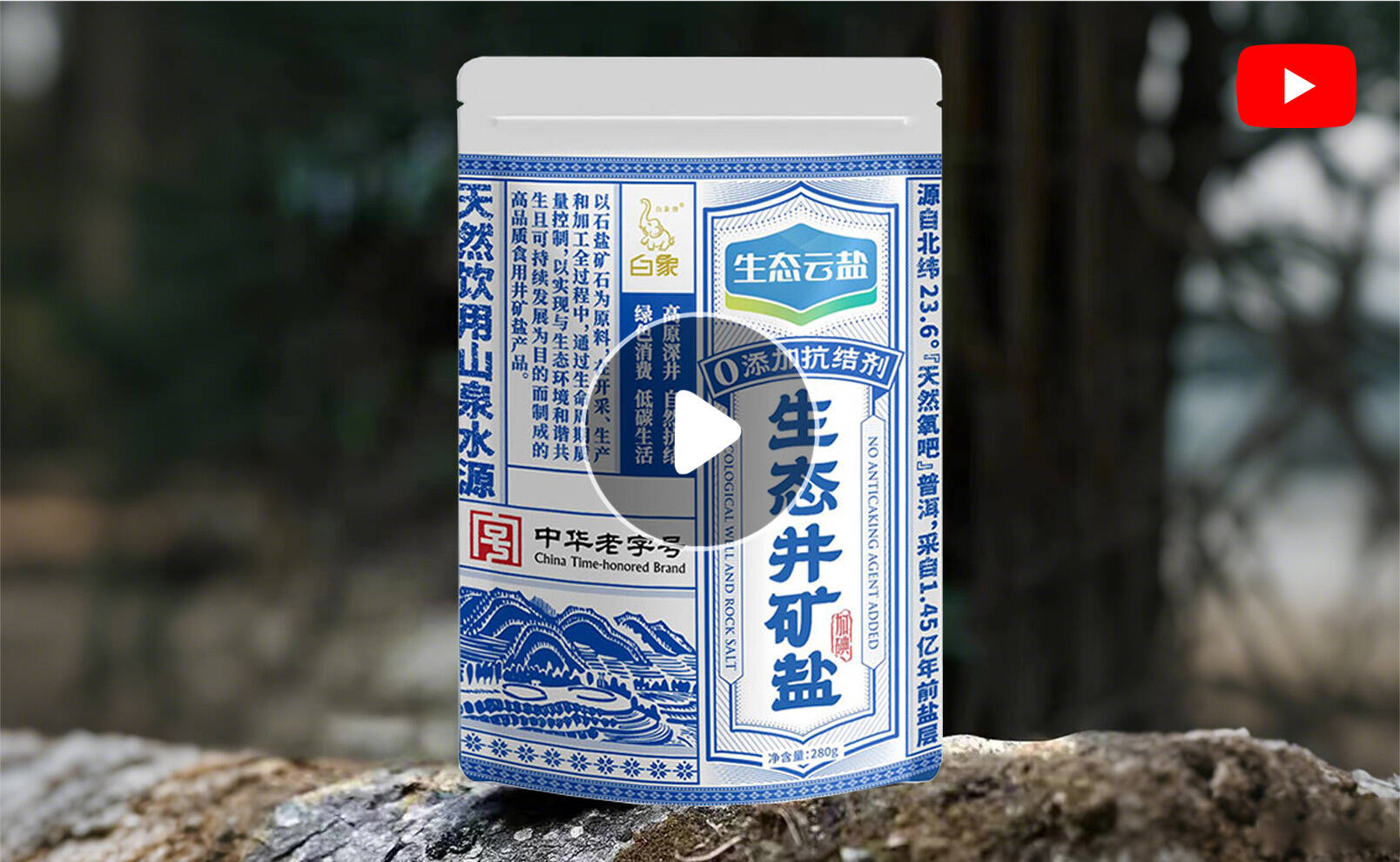
Best Selling Ecological Well Mineral Salt Iodized
Where public health demands intersect with sustainable mining principles, iodized ecological well salt establishes the benchmark for modern table salt. Employing balanced drilling technology, it extracts saturated brine from underground rock salt layers located over a thousand meters deep. Utilizing multi‑effect vacuum evaporation crystallization, it minimizes disturbance to surface environments and mineral vein structures. The production process adheres to a closed‑loop “mine‑to‑factory” ecological system. In crystallization towers, regularly formed crystals are precisely sprayed with a potassium iodate solution. This achieves a seamless transformation — from geological resource to standardized nutritional carrier.
In contrast to surface salt fields, this enclosed production guarantees complete cleanliness throughout extraction and finished packaging. Each grain embodies dual reliability: consistent nutritional fortification via artificial iodination, alongside product purity and ecological sustainability attained through modern industrial equipment. It does not pursue regional flavors or natural narratives. Instead, it fulfills public safety commitments — serving as a foundational necessity through the precision and controllability of modern industry.
Nutrition Facts Table
| Item | Per 100g | NRV% |
| Energy | 0 kJ | 0% |
| Protein | 0 g | 0% |
| Fat | 0 g | 0% |
| Carbohydrate | 0 g | 0% |
| Sodium | 39120 mg | 1956% |
| Iodine | 1800.0 µg | 1200% |
Advantages
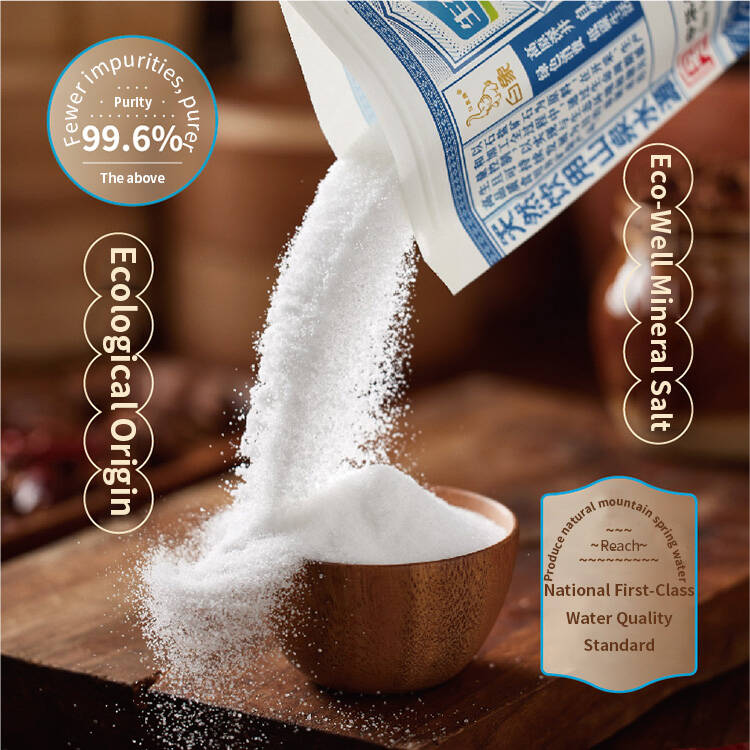
- No anti-caking agents added
- Mountain spring water salt
Made with natural mountain spring water meeting national Class I water quality standards - Purity >99.6%
Minimal impurities, purer taste
Characteristics
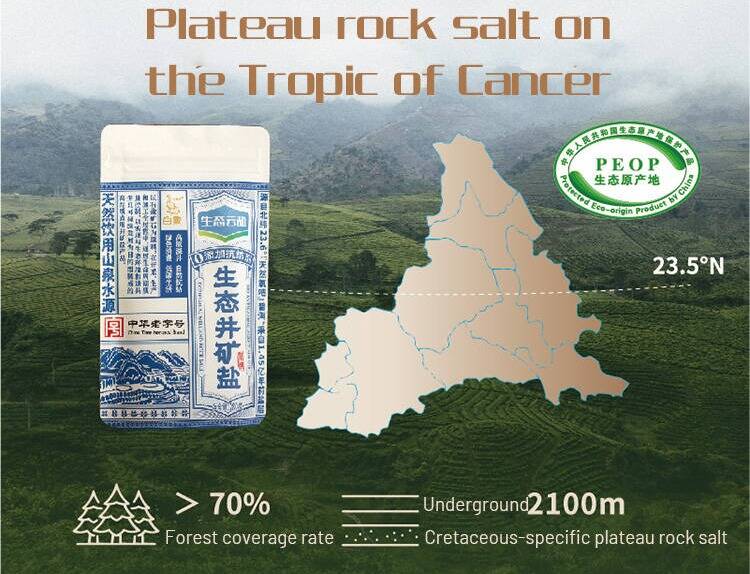
Pure and natural, far from pollution
Highland rock salt from the Tropic of Cancer
Forest coverage >70%
2,100 meters underground, unique highland rock salt from the Cretaceous period
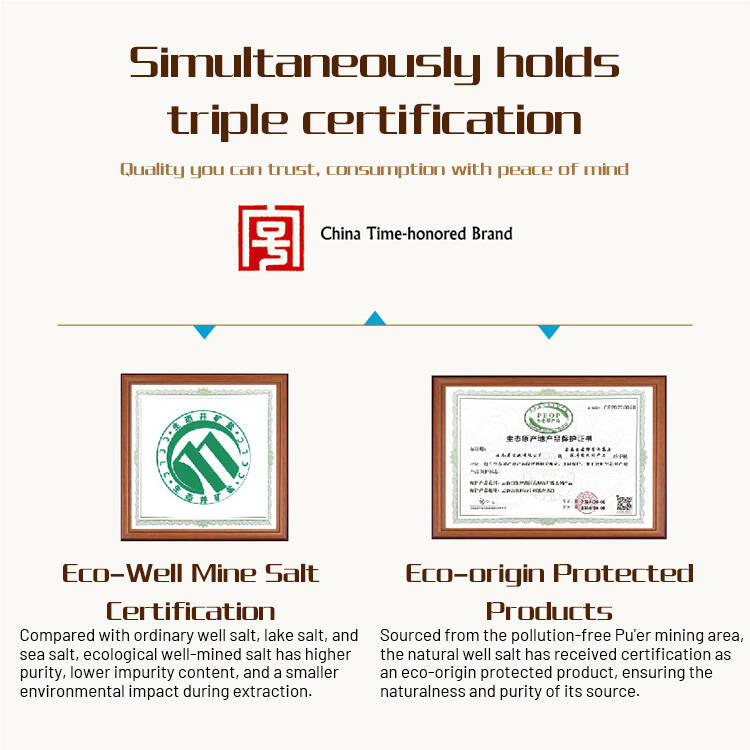
Authoritative Certification
We possess comprehensive testing reports and hold world-class and national-level authoritative certifications. As a long-established brand with years of experience, we are trustworthy.
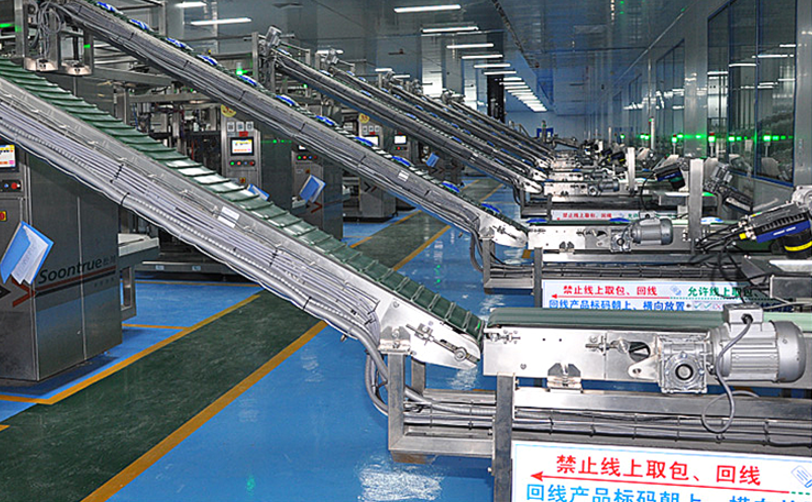
Mechanically Processed to Ensure Purity
We employ a fully automated, touch-free process that rigorously minimizes the risk of contamination throughout production, guaranteeing the inherent quality of our product.
FAQ
Q1: What is "Iodized Eco‑Well Rock Salt"?
A1: This is a standard edible salt that integrates modern mining technology, ecological principles, and public nutrition fortification.
Eco‑Well Rock Salt: Refers to salt produced by extracting brine from deep underground rock salt deposits. The process involves drilling and water‑injection dissolution, followed by purification and crystallization using modern chemical equipment. This method minimizes surface terrain disruption and is considered a relatively "ecological" extraction approach.
Iodized: Like all qualified iodized salts, potassium iodate — the iodine fortifier — is artificially added during production in accordance with national standards. This serves to prevent iodine deficiency disorders.
Q2: How does it differ from regular iodized refined salt and sea salt?
A2: Key distinctions lie in raw material sources, production processes, and product positioning.
| Comparison Item | Iodized Eco‑Well Rock Salt | Regular Iodized Refined Salt | Iodized Sea Salt |
|---|---|---|---|
| Raw Material Source | Deep underground rock salt deposits (brine extracted via drilling) | Underground rock salt deposits or salt lakes (potentially mined traditionally) | Modern seawater |
| Process Characteristics | Emphasizes "ecological mining" and modern chemical clean production. Fully enclosed to minimize environmental disturbance. | Traditional or modern mining, chemically refined into high‑purity sodium chloride. | Relies on solar evaporation in salt fields, dependent on weather and geography. |
| Product Positioning | Clean, reliable, modern basic iodized salt highlighting technological and environmental principles. | Most common, economical basic iodized salt. | Emphasizes natural traditional flavor with artificially added iodine. |
Q3: Is it healthier or safer?
A3: Regarding iodine nutrition and food safety, it has no fundamental difference from qualified regular iodized refined salt. Both meet national mandatory standards.
Safety: Modern, enclosed production processes enhance control over impurities and contaminants, theoretically ensuring purity.
Health: Its core health value also stems from artificially added iodine — for preventing iodine deficiency disorders. The promoted "ecological" aspect primarily refers to mining methods, not additional health benefits.
Q4: Is its iodine content stable? How should it be stored?
A4:
Iodine Stability: Potassium iodate is relatively stable. However, it remains susceptible to heat, moisture, and light exposure. Proper storage is crucial.
Storage Method: Must be stored in a cool, dry, light‑protected, sealed container — away from stovetops. Add salt just before serving to minimize iodine loss from high‑temperature cooking.
Q5: What does "eco‑friendly" mining refer to?
A5: Primarily refers to the relatively environmentally friendly water‑soluble extraction method via drilling. This involves drilling wells to inject clean water, dissolving underground rock salt to form brine, which is then extracted and processed — rather than large‑scale open‑pit mining. This method causes minimal damage to surface vegetation and terrain, produces less waste, allows water‑resource recycling, and reduces the environmental impact of traditional mining.
Q6: What are its flavor characteristics? How should it be used?
A6:
Flavor: As a highly refined salt, it offers a pure salty taste — without the dampness of sea salt or the mineral notes of rock salt. It provides a neutral palate.
Usage: It serves as a versatile everyday cooking salt, suitable for nearly all dishes and food processing. Its pure flavor profile will not overpower the natural taste of ingredients.
Q7: Is it suitable for everyone?
A7:
Suitable for: Most residents in iodine‑deficient regions — as a daily iodine source.
Caution: Individuals with hyperthyroidism, thyroiditis, or medical restrictions on iodine intake should choose the "non‑iodized" version of this salt — if available.
Q8: Can it replace other nutritional supplements?
A8: Absolutely not. It serves solely as a dietary source of iodine. It cannot substitute for calcium, iron, zinc, or other essential nutrients. A balanced diet remains fundamental.
Q9: Why choose this over cheaper refined salt?
A9: Choices are typically based on the following considerations — not health or nutritional advantages:
Supporting environmental values: Belief in its relatively more eco‑friendly extraction methods.
Trust in modern production: Valuing its enclosed, controlled, and clean manufacturing process.
Brand and quality preference: Confidence in specific brands’ standards for raw materials and production techniques.