Ammonium Sulphate: The "Versatile Nitrogen Source" from Field Yield Enhancement to Industrial Purification – A Core Raw Material for Agricultural Fertilization and Industrial Precipitation
Product Overview
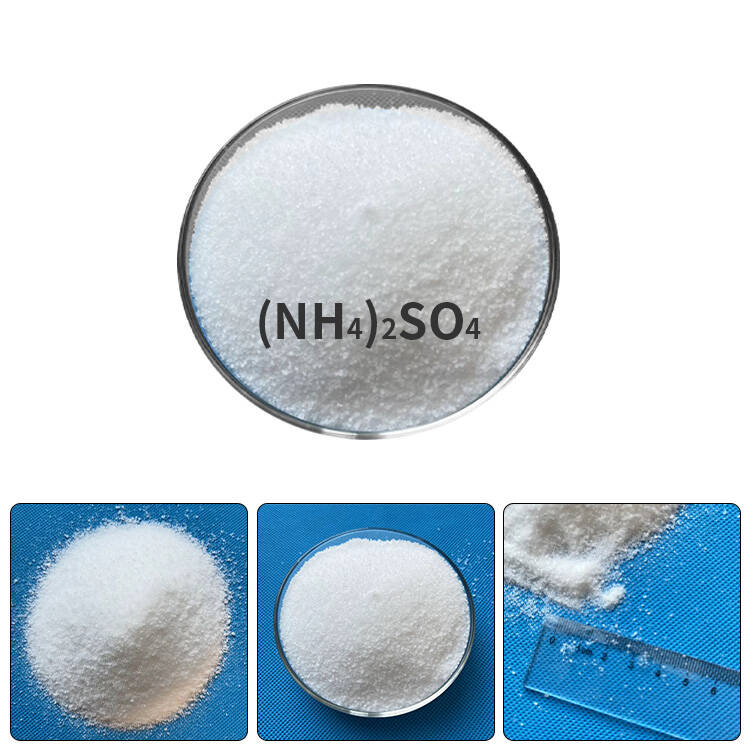
Ammonium Sulphate, with the chemical formula (NH₄)₂SO₄ and a molecular weight of 132.14, represents an important inorganic nitrogen fertilizer and industrial chemical. It appears as a white or off-white crystalline powder (some products may exhibit a slight yellow or grey tint due to impurities), odorless, with a density of approximately 1.77 g/cm³ and a melting point ranging from 230°C to 280°C (with decomposition). Ammonium sulphate is readily soluble in water (solubility of approximately 70g/100mL water at 0°C), producing a weakly acidic aqueous solution, and remains insoluble in organic solvents such as ethanol and acetone. At elevated temperatures, it decomposes, releasing ammonia gas and forming ammonium bisulphate.
From a production process perspective, ammonium sulphate primarily comes from three sources: coke oven gas recovery, caprolactam by-product, and synthetic ammonia neutralization. The coke oven gas recovery method is a by-product of the coking process in the steel industry, produced by recovering ammonia from coke oven gas and neutralizing it with sulphuric acid. The caprolactam by-product method represents a co-product of chemical production processes, and with the continuous expansion of China's caprolactam production capacity, the supply of by-product ammonium sulphate has significantly increased. The synthetic ammonia neutralization method involves the direct neutralization of synthetic ammonia with sulphuric acid, producing the most stable quality product. Ammonium sulphate from different sources varies in purity, impurity content, and crystalline form, making it suitable for different end-use applications.
From a global perspective, ammonium sulphate ranks among the largest-volume nitrogen fertilizer products and also serves as an important industrial basic raw material. Its unique characteristic lies in its ability to supply both nitrogen and sulphur nutrients simultaneously, giving it irreplaceable value in agricultural applications.
Core Application: The "Premium Nitrogen Source" in Agriculture
In the agricultural sector, ammonium sulphate stands as one of the most important nitrogen fertilizers, featuring rapid effectiveness and prolonged fertilizer efficiency:
-
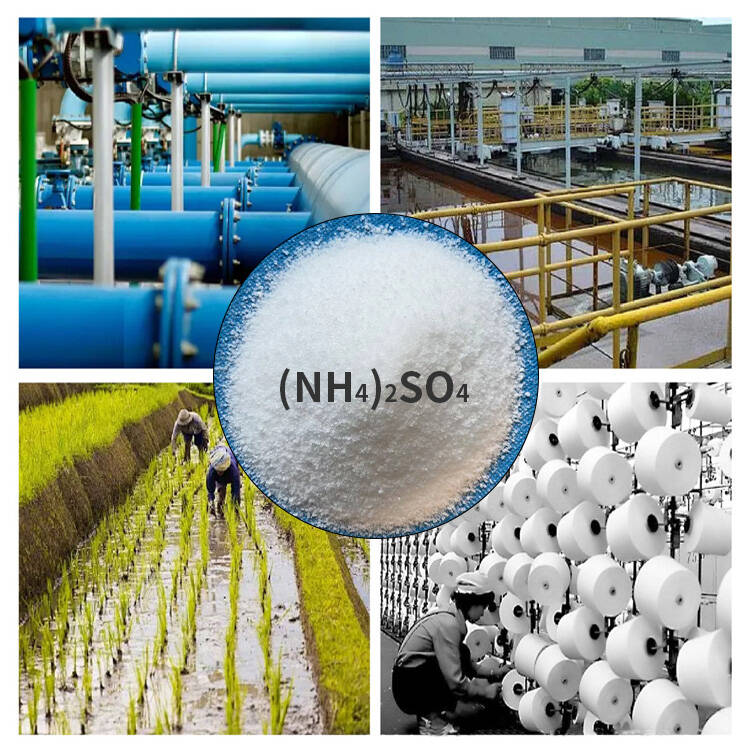
High-Quality Nitrogen-Sulphur Compound Fertilizer: Ammonium sulphate contains approximately 21% nitrogen and 24% sulphur, providing crops with both essential nutrients simultaneously. Sulphur is a key element for plant synthesis of proteins, amino acids, and chlorophyll. Sulphur deficiency can lead to leaf yellowing, stunted growth, and reduced disease resistance in crops. For oilseed crops with high sulphur requirements such as rapeseed, soybeans, and peanuts, as well as bulb vegetables like onions and garlic, ammonium sulphate demonstrates particularly significant yield-enhancing effects.
-
Preferred Nitrogen Source for Sulphur-Loving Crops: Cruciferous crops (such as rapeseed, cabbage, and kale) and liliaceous crops (such as onions, garlic, and leeks) have relatively high sulphur requirements. Ammonium sulphate application achieves better yield increases compared to other nitrogen fertilizers like urea. On sulphur-deficient soils, the effectiveness of ammonium sulphate application is even more pronounced.
-
Ideal Choice for Alkaline Soils: Ammonium sulphate is a physiologically acidic fertilizer. When applied to alkaline soils, ammonium ions are absorbed by crops or converted to nitrates by microorganisms. The residual sulphate ions neutralize soil alkalinity, lower pH levels, and improve soil physicochemical properties. This characteristic makes it a preferred fertilizer for improving saline-alkali land in northern regions and for acidic soils in southern regions.
-
Suitable for Both Base and Top Dressing: With good water solubility and rapid fertilizer efficiency, ammonium sulphate can be used both as a base fertilizer applied before sowing and as a top dressing applied during critical crop growth stages. On major grain crops such as rice, wheat, and corn, ammonium sulphate is commonly used as a top dressing to promote tillering and grain filling.
-
Ideal Raw Material for Compound Fertilizers and Water-Soluble Fertilizers: High-purity ammonium sulphate serves as an important nitrogen source raw material for producing high-concentration compound fertilizers and water-soluble fertilizers. It can be thoroughly mixed with other phosphate and potassium fertilizers to produce balanced nutrient compound fertilizers. In fertigation systems, the high water solubility of ammonium sulphate makes it an ideal component for water-soluble fertilizer formulations.
In agricultural applications, ammonium sulphate accounts for over 70% of demand, particularly in major agricultural production regions such as Southeast Asia, South Asia, and Africa, where it is widely used as a cost-effective nitrogen source for crops including rice, corn, oil palm, and rubber.
Diversified Applications: Extensive Uses Beyond Agriculture
Beyond its largest application area in agriculture, ammonium sulphate, leveraging its excellent chemical properties, finds extensive applications across numerous other sectors:
Industrial Chemicals and Auxiliaries
-
Rare Earth Extraction and Separation: In the field of rare earth metallurgy, ammonium sulphate serves as an ion exchange agent for rare earth element extraction and separation. Through ion exchange adsorption technology, ammonium sulphate solutions displace rare earth ions adsorbed onto mineral clays, enabling rare earth enrichment and purification. As the world's largest rare earth producer, China has a special position for ammonium sulphate applications in this field.
-
Pharmaceutical and Fermentation Industries: In the production of antibiotics, yeast, enzymes, and other fermentation products, ammonium sulphate is commonly used as a nitrogen source additive, providing adequate nitrogen nutrition for microbial growth. Additionally, ammonium sulphate is used for protein salting-out precipitation, where high-concentration salt solutions cause proteins to precipitate from solution, widely applied in the separation and purification processes of biochemical products.
-
Tanning and Textile Industries: In leather processing, ammonium sulphate serves as a deliming agent and softening agent, helping remove lime and impurities from rawhides, resulting in soft and elastic leather. In textile dyeing and printing, ammonium sulphate acts as a dyeing auxiliary, helping dyes adhere to fibers and improving colorfastness and brightness.
-
Wood Preservation and Flame Retardancy: Ammonium sulphate, when compounded with boric acid, borax, and other substances, can be formulated into wood preservative and flame-retardant treatments for construction timber, railway ties, utility poles, and other applications, extending wood service life and improving fire resistance.
Environmental Protection and Water Treatment
-
Water Purification and Precipitation: In water treatment applications, ammonium sulphate is used to remove calcium ions from water, preventing scale formation in pipelines and boilers. Additionally, it can serve as a coagulation aid, helping suspend solids settle and improving water treatment efficiency.
-
Flue Gas Desulphurization By-Product: In wet flue gas desulphurization processes at coal-fired power plants, ammonia is used to absorb sulphur dioxide, producing ammonium sulphite, which is then oxidized to form ammonium sulphate, achieving both emission control and resource recovery objectives. This recovered ammonium sulphate can be returned to agricultural production as fertilizer, forming a circular economy model.
-
Landfill Leachate Treatment: In landfill leachate treatment, ammonium sulphate is used to adjust the carbon-to-nitrogen ratio, promoting microbial nitrification and denitrification processes and improving nitrogen removal efficiency.
Other Application Areas
-
Food Additive: In the food industry, ammonium sulphate can serve as a dough conditioner and fermentation aid in the production of baked goods such as bread and pastries, improving gluten network structure and product texture.
-
Feed Additive: As a non-protein nitrogen source for ruminant animals, ammonium sulphate can be added to feed to supplement nitrogen nutrition, although addition levels must be strictly controlled to avoid the risk of ammonia toxicity.
-
Analytical Chemical Reagent: In laboratory settings, ammonium sulphate is used as an analytical reagent for protein precipitation, sulphate determination, and other chemical analyses.
Product Classification and Quality Standards
Based on production process, purity, and application fields, ammonium sulphate is primarily classified into the following three categories:
| Product Type | Production Process/Source | Nitrogen Content | Core Characteristics | Application Scenarios |
|---|---|---|---|---|
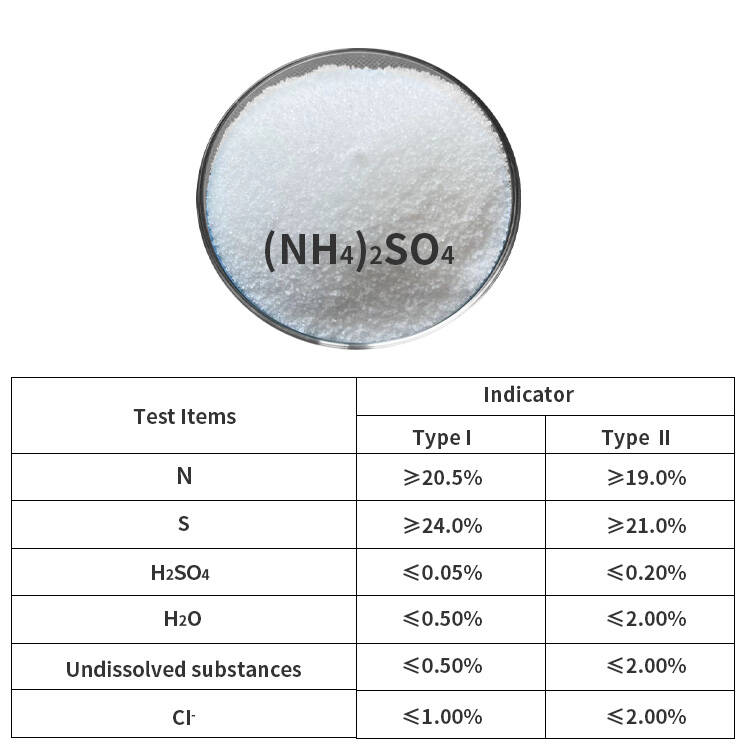
| Agricultural Grade | Coke oven gas recovery, caprolactam by-product | N ≥ 20.5% | Cost-effective, widely available, contains appropriate free acid (≤0.2%), can be directly applied as nitrogen-sulphur compound fertilizer or used in compound fertilizer production | Grain crops (rice, wheat, corn), oilseed crops (rapeseed, soybeans), cash crops (vegetables, fruit trees) |
| Industrial Grade | Synthetic ammonia neutralization, high-purity purification | N ≥ 21.0% | High purity (main content ≥99.0%), low impurities (Cl⁻ ≤0.05%), low free acid content (≤0.05%), minimal water-insoluble matter | Rare earth extraction, fermentation industry, pharmaceutical production, tanning and textiles, flame retardant production |
| Food/Feed Grade | High-purity synthesis, refined purification | N ≥ 21.0% | Extremely low heavy metal content (As, Pb, Hg strictly controlled), compliant with food safety standards, no toxic or harmful impurities | Bakery food additives, non-protein nitrogen supplements in feed |
We strictly adhere to the GB/T 535-2020 national standard (agricultural/industrial grades), with key control specifications including:
-
Nitrogen Content: Agricultural grade N ≥ 20.5%, Industrial grade N ≥ 21.0%
-
Moisture: ≤ 1.0%
-
Free Acid (H₂SO₄): Agricultural grade ≤0.2%, Industrial grade ≤0.05%
-
Water-Insoluble Matter: Agricultural grade ≤0.5%, Industrial grade ≤0.05%
-
Iron Content: Industrial grade ≤0.007%
-
Heavy Metals (as Pb): Food grade ≤10 mg/kg
Market Dynamics and Foreign Trade Opportunities
The global ammonium sulphate market demonstrates steady growth, driven by both increasing agricultural production demand and expanding industrial applications:
-
Market Size: The global ammonium sulphate market continues to expand, with market volume estimated at approximately 45 million tons in 2023. China stands as the world's largest producer and exporter of ammonium sulphate, with annual production capacity exceeding 20 million tons, accounting for over 40% of global capacity. With the continued expansion of China's caprolactam production capacity, the supply of by-product ammonium sulphate has significantly increased, further strengthening China's supply position in the global ammonium sulphate market.
-
Strong Export Performance: China's ammonium sulphate export volume exceeded 14 million tons in 2023, reaching a record high. Major export destinations include Brazil, Vietnam, Indonesia, Malaysia, Thailand, Myanmar, the Philippines, and South Africa. Among these, Brazil stands as China's largest export market for ammonium sulphate, accounting for over 30% of total Chinese exports.
-
Demand Drivers:
-
Global Food Security Demand: With continued global population growth and increasingly limited arable land resources, increasing per-unit-area yield has become critical for ensuring food security, driving continued demand for efficient fertilizers.
-
Expansion of Sulphur-Loving Crop Cultivation: Cultivation areas for sulphur-loving crops such as rapeseed, soybeans, and oil palm continue to expand, driving ammonium sulphate demand growth.
-
Saline-Alkali Land Improvement Demand: Saline-alkali land improvement projects in countries such as China, India, and Pakistan generate strong demand for physiologically acidic fertilizers.
-
Rare Earth Industry Development: As strategic mineral resources, rare earth extraction and processing maintain stable demand for ammonium sulphate.
-
-
Price Trends: Ammonium sulphate prices exhibit certain cyclical fluctuations influenced by multiple factors including raw materials (synthetic ammonia, sulphuric acid), caprolactam operating rates, and international shipping costs. As a foreign trading company, we closely monitor market dynamics to provide timely market analysis and procurement recommendations to our customers.
-
Regional Demand Characteristics:
-
Brazil: The world's largest importer of ammonium sulphate, primarily used for sugarcane, soybeans, and corn, with continued import growth.
-
Southeast Asia: Rice, oil palm, and rubber cultivation in Vietnam, Indonesia, and Malaysia maintain stable demand for ammonium sulphate.
-
South Asia: Wheat and rice cultivation in India and Bangladesh generate strong demand.
-
Africa: Significant growth potential for fertilizer demand driven by agricultural modernization progress.
-
Our Advantages
As a specialized foreign trading company dealing in chemical products, we are committed to providing customers with high-quality ammonium sulphate products and comprehensive professional services:
-
Stable and Reliable Supply Chain: We have established long-term strategic partnerships with multiple major domestic ammonium sulphate producers, ensuring priority supply during peak seasons with consistent quality across batches. Our supply network covers major production areas in East China, North China, and Central China, enabling flexible resource allocation to meet diverse customer procurement requirements.
-
Multi-Specification Product Supply:
-
Agricultural Grade Ammonium Sulphate: Good whiteness, uniform particles, suitable for direct application or compound fertilizer production
-
Industrial Grade Ammonium Sulphate: High purity, low impurities, suitable for rare earth extraction, pharmaceutical fermentation, and other industrial applications
-
Granular Ammonium Sulphate: 2-4mm particle size, good flowability, low dust, suitable for bulk blending (BB) fertilizer production
-
Powdered Ammonium Sulphate: Uniform fineness, rapid dissolution, suitable for water-soluble and liquid fertilizers
-
-
Rigorous Quality Control:
-
Batch analysis certificates (COA) provided prior to each shipment
-
Third-party inspection support from SGS, BV, Intertek, and other international inspection agencies
-
Product specifications strictly comply with GB/T 535-2020 or customer-designated standards
-
Customized impurity control (such as low chloride, low heavy metals) available upon customer request
-
-
Professional Logistics Services:
-
Container Transportation: As a non-hazardous cargo, ammonium sulphate faces minimal transportation restrictions and can be shipped using standard 20ft and 40ft containers
-
Bulk Carrier Transportation: Bulk carrier shipping arrangements available for large-volume orders, reducing per-unit transportation costs
-
Warehousing and Distribution: Cooperative warehouses at major domestic ports (Qingdao, Tianjin, Shanghai, Lianyungang, etc.) enable rapid port consolidation and shipment
-
Documentation Services: Complete export documentation (certificate of origin, phytosanitary certificate, quality certificate, etc.) provided to assist customers with smooth customs clearance
-
-
Technical Advisory and Market Services:
-
Ammonium sulphate fertilization recommendations tailored to different crops and soil conditions
-
Regular market updates and price trend analysis
-
Assistance with understanding import country inspection and quarantine requirements and tariff policies
-
Conclusion
From abundant rice harvests in Southeast Asian paddies to lush sugarcane fields in Brazil; from fine purification in rare earth smelting to microbial cultivation in pharmaceutical fermentation—ammonium sulphate, with its unique characteristics of simultaneous nitrogen-sulphur supply and both quick and prolonged effectiveness, serves as the "versatile nitrogen source" connecting agriculture and industry. As a specialized trading company deeply engaged in this field, we are committed to delivering China's high-quality, cost-effective ammonium sulphate products to customers worldwide. Whether you are a fertilizer distributor, compound fertilizer manufacturer, rare earth smelting enterprise, or pharmaceutical fermentation facility, we pledge to provide superior products and solutions with professionalism, integrity, and efficient service. We welcome your inquiries to embark on a journey of long-term, stable cooperation.