Aluminum Fluoride: The "Core Technical Additive" for the Aluminum Electrolysis Industry – A Green Choice from Energy Saving & Emission Reduction to High‑End Manufacturing
Product Overview
Aluminum Fluoride — with the chemical formula AlF₃ and a molecular weight of 83.98 — represents a vital inorganic fluoride product in the chemical industry. It appears as a white powder or colourless triclinic crystals. It has a density of approximately 3.00 g/cm³. Its melting point is 1040°C. Its boiling point — sublimation — is 1272°C. Aluminum fluoride exhibits highly stable properties. It is slightly soluble in cold water. It is soluble in hot water. It is resistant to dissolution in most acids and alkaline solutions. It remains insoluble in most organic solvents. While resistant to decomposition under strong heating, it undergoes sublimation.
From a production process perspective, aluminum fluoride is primarily classified into three types: anhydrous aluminum fluoride, dry‑process aluminum fluoride, and wet‑process aluminum fluoride. Among these, anhydrous aluminum fluoride is produced through a gas‑solid reaction between anhydrous hydrogen fluoride — with a purity of 99.9% or higher — and aluminum hydroxide. It features high main content and extremely low impurity levels. This represents the development direction for aluminum fluoride salts used in the aluminum industry. The dry‑process aluminum fluoride process uses unrefined hydrogen fluoride gas derived from fluorite as the raw material — to react with aluminum hydroxide. The wet‑process uses hydrofluoric acid containing water as the raw material — for liquid‑solid reactions.
The global aluminum fluoride market exhibits a relatively concentrated competitive landscape. Key market participants include Fluorsid, Do‑Fluoride, Hunan Nonferrous Fluoride Chemical, PhosAgro, Rio Tinto Alcan, Gulf Fluor, and Yunnan Yuntianhua — among other internationally recognised enterprises.
Core Application: The "Perfect Partner" for the Aluminum Electrolysis Industry
In the aluminum electrolysis industry, aluminum fluoride plays an indispensable core role. It primarily serves to lower the melting point of the electrolyte — and improve electrical conductivity.
Its core functions are reflected in the following aspects:
- Melting Point Reduction: During the Hall‑Héroult aluminum electrolysis process, aluminum fluoride is added to the electrolyte system as a flux. It effectively reduces the melting temperature of alumina. This allows the electrolysis process to operate at lower temperatures — significantly reducing energy consumption.
- Improved Electrical Conductivity: Aluminum fluoride significantly enhances the electrical conductivity of the electrolyte. It improves current efficiency — and reduces energy losses. This directly lowers the production cost of electrolytic aluminum.
- Electrolyte Molecular Ratio Adjustment: Anhydrous aluminum fluoride — with its high main content and extremely low impurity levels — effectively adjusts the electrolyte molecular ratio. It reduces hydrolysis losses during aluminum electrolysis production. It also contributes to improved aluminum ingot quality.
- Significant Energy Saving and Emission Reduction Benefits: Based on domestic electrolytic aluminum production of 12.8 million tons in 2007, replacing wet‑process aluminum fluoride with anhydrous aluminum fluoride would reduce nationwide fluoride emissions by over 20,000 tons annually. This data fully demonstrates the outstanding environmental contributions of high‑quality aluminum fluoride.
In aluminum electrolysis applications, aluminum fluoride accounts for over 70% of demand. It is an indispensable key auxiliary material for the aluminum industry. Currently, domestic electrolytic aluminum producers prioritise the stability of aluminum fluoride supply. High‑density aluminum fluoride accounts for at least 85% of usage.
Diversified Applications: Extensive Uses Beyond the Aluminum Industry
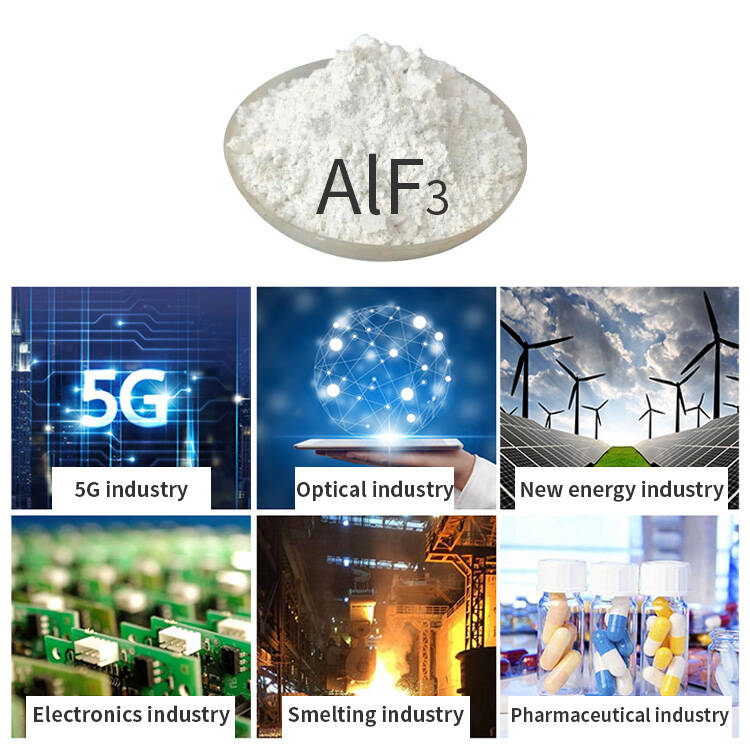
Beyond its largest application area in aluminum electrolysis, aluminum fluoride — leveraging its unique chemical stability — finds extensive applications across numerous other sectors:
- Non‑Ferrous Metal Flux: Used as a flux for non‑ferrous metals such as copper, magnesium, and zinc. It helps remove impurities from molten metal — and improves metal purity.
- Ceramics and Enamel Industry: Functions as a flux and glaze component in ceramic and enamel glazes. It improves glaze surface gloss and adhesion — resulting in smoother and more uniform product surfaces.
- Glass Industry: Used in manufacturing optical lenses — and as an opacifier for glass. It enhances the optical properties of glass products.
- Chemical Industry: Serves as a catalyst in organic synthesis — and as a raw material for producing synthetic cryolite.
- Metal Welding: Used as a welding fluid in metal joining applications. It improves weld quality.
- Alcohol Production: Functions as an inhibitor for secondary fermentation — controlling the fermentation process.
- Essential Oil Production: Acts as an inhibitor for secondary fermentation processes.
Product Classification and Quality Standards
Based on production processes and product characteristics, aluminum fluoride is primarily classified into the following three categories:
| Product Type | Production Process | Core Characteristics | Application Scenarios |
| Anhydrous Aluminum Fluoride | Gas-solid reaction between anhydrous hydrogen fluoride and aluminum hydroxide | High main content (AlF₃ > 95%), extremely low impurities, minimal hydrolysis loss, high yield, significant environmental advantages | Large-scale electrolytic aluminum enterprises, high-end applications with strict quality requirements |
| Dry-Process Aluminum Fluoride | Gas-solid reaction between unrefined hydrogen fluoride gas from fluorite and aluminum hydroxide | Relatively lower cost, stable performance | General aluminum electrolysis industry, conventional fluoride salt applications |
| Wet-Process Aluminum Fluoride | Liquid-solid reaction between hydrofluoric acid (with water) and aluminum hydroxide | Traditional process, gradually being replaced by anhydrous methods | Some traditional process production lines |
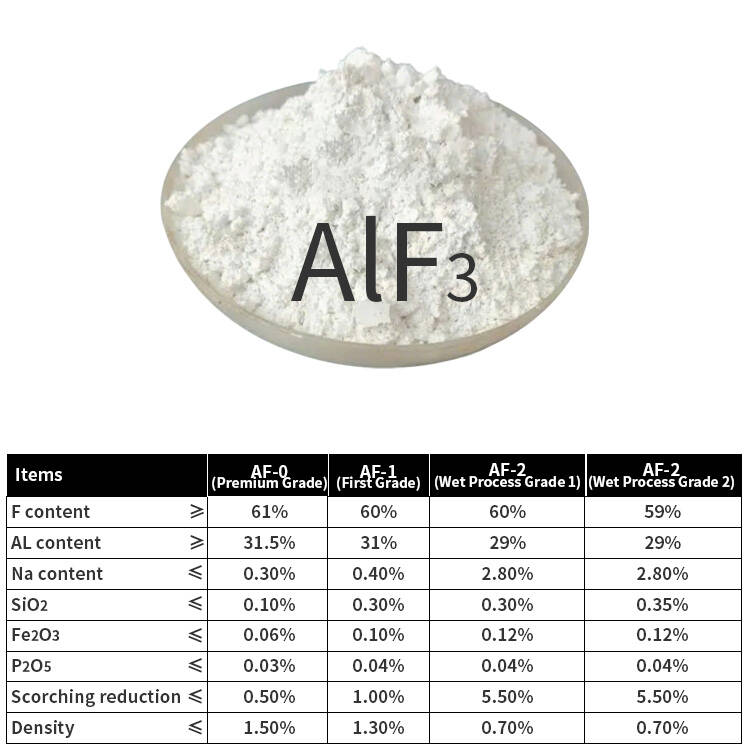
We strictly adhere to the GB/T 4292-2007 national standard (currently under revision), rigorously controlling key parameters. Product quality specifications include:
- Chemical Composition: AlF₃ content, Al₂O₃ content, impurity limits for SiO₂, Fe₂O₃, P₂O₅, SO₄²⁻, etc.
- Physical Properties: Particle size distribution, bulk density, flowability, etc.
- Moisture Content: Strictly controlled — to ensure product stability.
Market Dynamics and Foreign Trade Opportunities
The global aluminum fluoride market demonstrates steady growth. This is driven by widespread applications in aluminum production and various industrial processes:
- Market Size: The global aluminum fluoride market reached $1.78 billion in sales in 2025. Market size was estimated at approximately $2.0 billion in 2024 — and is projected to reach $2.06 billion in 2025. By 2033, the market is expected to grow to $2.57 billion — representing a compound annual growth rate — CAGR — of 2.8%. Other research forecasts the global aluminum fluoride market sales scale to reach $2.04 billion in 2026 — and $2.327 billion by 2033.
- Supply Landscape: China stands as the world’s largest producer and exporter of aluminum fluoride. According to statistics, domestic aluminum fluoride production in China reached 790,000 tons in 2024. Apparent demand was 656,100 tons. Domestic aluminum fluoride production capacity is approximately 1.3 million tons annually. Low‑density aluminum fluoride accounts for about 100,000 tons of annual capacity — operating at utilisation rates exceeding 90%.
- Strong Export Performance: China’s aluminum fluoride export volume reached 150,900 tons in 2025. This represented a year‑on‑year increase of 68%. Export value reached RMB 1.596 billion — up 190% year‑on‑year. The top six export destinations were India, Australia, Malaysia, Indonesia, Brazil, and Bahrain. These collectively accounted for 70.12% of total exports.
- Regional Demand Growth: With the expansion of electrolytic aluminum capacity in regions such as India and Southeast Asia, international market demand for aluminum fluoride continues to increase. Taking low‑density aluminum fluoride as an example, Chinese products are priced lower than European export prices — presenting significant export opportunities.
- Future Outlook: New aluminum fluoride production capacity over the next two years is expected to be primarily located in Xinjiang and Inner Mongolia. Annual capacities are approximately 150,000 tons and 90,000 tons respectively. With the advancement of national capacity restriction policies and strengthened industry self‑discipline, the aluminum fluoride industry is expected to achieve healthy development.
Our Advantages
As a specialised foreign trade company dealing in chemical products, we are committed to providing customers with high‑quality aluminum fluoride products and professional services:
- Stable and Reliable Supply Chain: We maintain long‑term strategic partnerships with major domestic aluminum fluoride producers.This ensures priority supply during peak seasons — with consistent quality across batches.
- Multi‑Specification Product Supply:
Anhydrous Aluminum Fluoride: High main content, low impurities — compliant with AF‑0 and AF‑1 national standards.
Dry‑Process Aluminum Fluoride: High cost‑performance ratio — suitable for conventional aluminum electrolysis production.
Low‑Density / High‑Density Aluminum Fluoride: Different specifications available — according to customer process requirements.
- Rigorous Quality Control: Batch analysis certificates — COA — are available prior to shipment. Third‑party inspection support — such as SGS or BV — is provided. This ensures all product specifications comply with GB/T 4292‑2007 or customer‑designated standards.
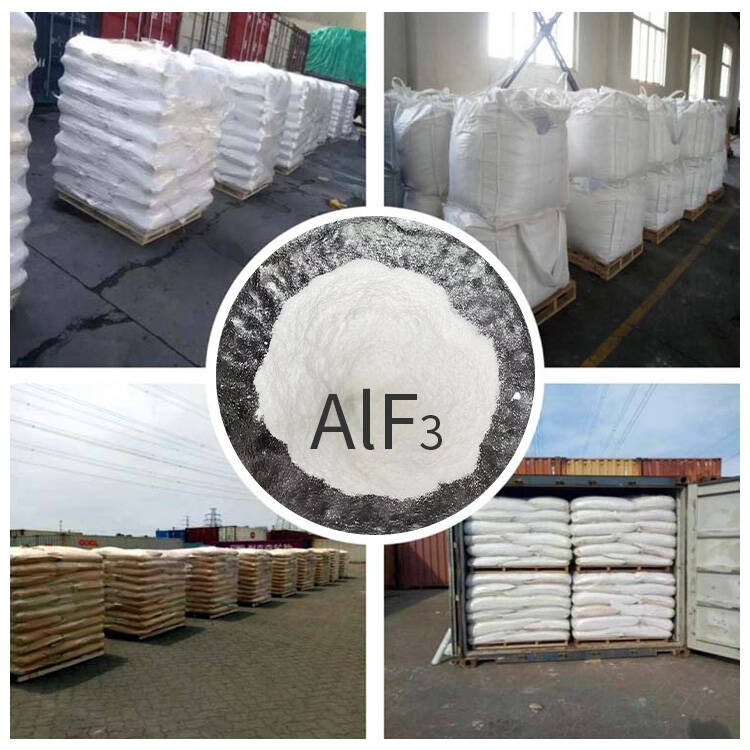
- Professional Logistics Services: As a Class 8 corrosive substance — UN number to be confirmed — we possess extensive experience in hazardous material exports. We provide optimal logistics solutions — to ensure safe and timely delivery.
- Technical Advisory Services: We offer aluminum fluoride selection recommendations, usage guidance, and technical support — tailored to different electrolytic aluminum production processes. This helps customers optimise production costs.
Conclusion
From energy savings in aluminum electrolytic cells to enhanced gloss on ceramic glazes, aluminum fluoride quietly yet fundamentally supports the operations of modern industry. As a specialised supplier deeply engaged in this field, we are committed to delivering China’s high‑quality aluminum fluoride resources to clients worldwide. Whether you are an electrolytic aluminum producer, ceramic manufacturer, or metal processing enterprise, we pledge to provide superior products and services — with professionalism and integrity. We welcome your inquiries — to explore potential cooperation opportunities.