85% Phosphoric Acid: The "Industrial MSG" from Farm to Table – A Core Raw Material for Food Additives and Metal Surface Treatment
Product Overview
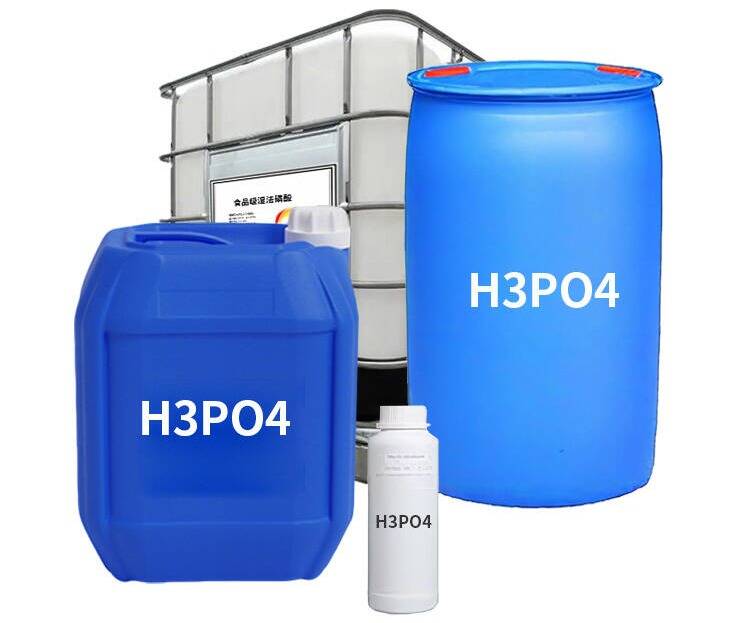
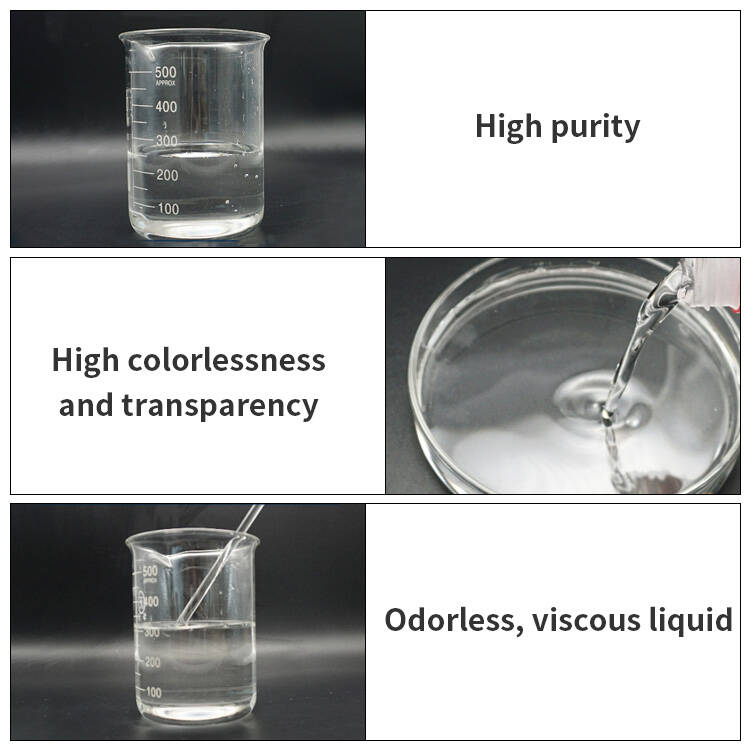
85% Phosphoric Acid, with the chemical formula H₃PO₄ and commonly known as orthophosphoric acid, represents a vital inorganic medium-strength acid in the chemical industry. It appears as a colorless, transparent, viscous syrup-like liquid with no odor and a distinctly acidic taste. At 85% concentration, it has a density of approximately 1.685 g/ml, a melting point of 42.35°C, and a boiling point of 158°C (with decomposition). This specific concentration represents an optimal balance between stability and usability, making it suitable for both diluted applications and direct industrial use.
Phosphoric acid exhibits low volatility and resistance to decomposition, with minimal oxidizing properties while maintaining the typical characteristics of acids. As a tribasic weak acid, its acidic strength falls between strong mineral acids like hydrochloric, sulfuric, and nitric acids and weaker acids such as acetic and boric acids. The compound readily absorbs moisture from the air (hygroscopic) and, when heated to 300°C, undergoes dehydration to form pyrophosphoric acid, which further converts to metaphosphoric acid upon continued heating.
From a production perspective, phosphoric acid is manufactured through two primary methods: thermal process and wet process. China stands as the world's leading producer and exporter of phosphoric acid, with manufacturing concentrated in regions including Shandong, Hainan, and Chongqing. These areas benefit from well-developed chemical industrial parks and convenient port logistics. Shandong province, leveraging its proximity to Qingdao Port, offers rapid sea freight capabilities with delivery times typically ranging from 10 to 25 days following order confirmation.
Core Application: The "Acid Contributor" in the Food Industry
In the food and beverage sector, 85% phosphoric acid serves as an indispensable food additive with widespread applications:
- Carbonated Beverages: As an acidulant, phosphoric acid defines the characteristic profile of cola-type beverages, imparting their distinctive refreshing sourness and flavor balance. The global increase in demand for processed and fortified foods continues to drive the expansion of phosphoric acid applications in the food additive sector.
- Food Processing: Functioning as an acidity regulator and preservative, it finds application in various food products including jams and dairy items, enhancing flavor profiles and extending shelf life. Food-grade phosphoric acid must strictly comply with FCC or GB 1886.15 standards, with rigorous limits on heavy metals such as arsenic and lead.
- Yeast Nutrient: In the baking industry, phosphoric acid serves as a yeast nutrient, promoting fermentation processes and improving the quality of baked goods.
The demand for phosphoric acid in the food additive sector continues its steady growth trajectory, driven by increasing global consumer preference for convenience foods.
Diversified Applications: Extending into Industrial and Technological Fields
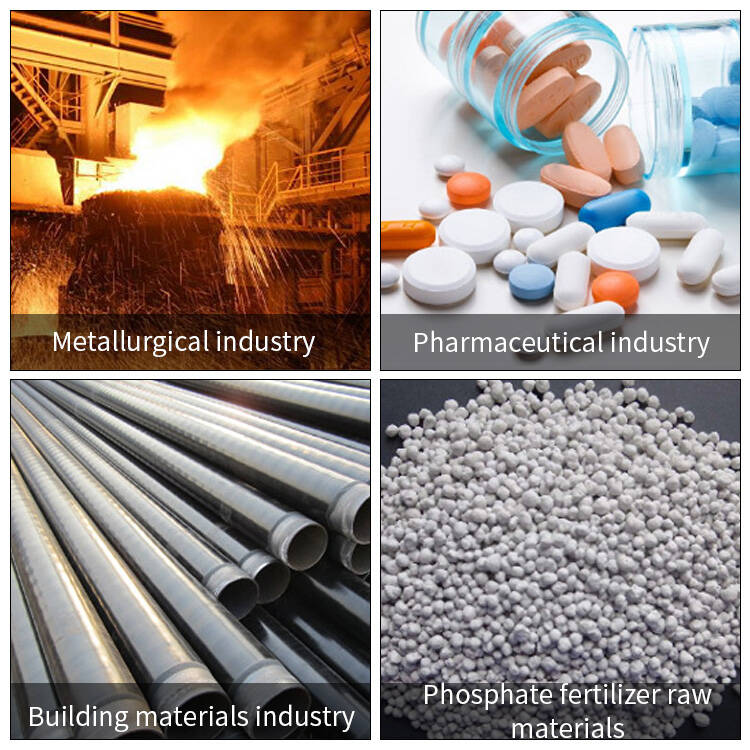
Beyond its significant role in the food industry, 85% phosphoric acid finds extensive applications across numerous sectors due to its excellent chemical properties:
Metal Surface Treatment
Phosphoric acid stands as a core agent in metal surface treatment applications:
- Rust-Proof Phosphating: Forms an insoluble phosphate protective film on metal surfaces, effectively preventing corrosion. This application finds widespread use in automotive manufacturing, household appliances, and construction materials.
- Chemical Polishing: Combined with nitric acid as a chemical polishing agent, it enhances the smoothness and gloss of metal surfaces.
- Cleaning and Rust Removal: In aviation maintenance, 85% phosphoric acid is commonly employed for rust removal and metal surface preparation prior to coating or painting applications.
Agriculture and Fertilizers
Agriculture represents the largest end-use sector for 85% phosphoric acid, accounting for over 50% of total demand:
- Fertilizer Production: Phosphoric acid serves as the core raw material for manufacturing phosphate fertilizers including superphosphate and monopotassium phosphate, playing a crucial role in enhancing soil fertility and crop yields.
- Animal Feed Additives: Used in producing feed-grade nutrients such as monocalcium phosphate, supplying essential phosphorus elements required by livestock.
With global population growth driving increasing food demand, modern agriculture's reliance on phosphate fertilizers continues to strengthen. Government initiatives aimed at improving agricultural productivity further stimulate phosphoric acid demand.
Industrial Chemical Manufacturing
- Cleaning Products: As a raw material for detergent and cleaning agent production, phosphoric acid effectively removes stains while enhancing cleaning efficiency. Heightened global awareness of hygiene and cleanliness following the pandemic has further stimulated growth in this sector.
- Flame Retardants: Used in manufacturing phosphorus-containing flame retardants, widely applied in electronic equipment, construction materials, and textiles.
- Water Treatment: Employed for impurity removal and water quality improvement during water treatment processes. This application segment continues steady growth amid increasing global concern over water pollution and scarcity.
Pharmaceuticals and Other High-End Applications
- Pharmaceutical Industry: Used in manufacturing phosphorus-containing medications such as sodium glycerophosphate, serving as both active pharmaceutical ingredients (APIs) and excipients in drug formulations.
- Electronics Industry: High-purity electronic-grade phosphoric acid finds application in precision processes including semiconductor cleaning and etching.
- Laboratory Reagent: Functions as a general reagent in analytical chemistry applications.
Product Forms and Quality Standards
Based on purity requirements and application fields, 85% phosphoric acid is primarily classified into the following grades:
| Product Grade | Typical Purity | Applicable Standard | Core Characteristics & Application Scenarios |
| Food Grade | H₃PO₄ ≥ 85.0% | FCC / GB 1886.15 | Strict heavy metal controls (As ≤ 1ppm, Pb ≤ 5ppm); suitable for beverages, food additives, and pharmaceutical applications. |
| Industrial Grade | H₃PO₄ ≥ 85.0% | GB/T 2091-2008 / ISO 9001 | Higher impurity thresholds permitted; suitable for metal surface treatment, water treatment, detergents, and fertilizer production. Available in various color specifications including 20, 30, and 40. |
| Electronic Grade | High Purity | Custom Enterprise Standards | Extremely low impurity content; suitable for precision electronic manufacturing including semiconductors and integrated circuits. |
We strictly adhere to national standards and international specifications, rigorously controlling key parameters including main content, color, chloride, sulfate, iron, arsenic, lead, and other heavy metal content, ensuring stable performance across various downstream applications.
Market Dynamics and Foreign Trade Opportunities
The global 85% phosphoric acid market demonstrates steady growth characteristics:
- Market Size: The global industrial-grade 85% phosphoric acid market reached approximately $35.46 billion in 2025, with projections indicating growth to $38.91 billion by 2031, representing a compound annual growth rate (CAGR) of 1.6%. Additional research forecasts the global 85% phosphoric acid market to reach $15.3 billion by 2033, with a CAGR of 4.7%.
- Regional Landscape: The Asia-Pacific region represents the world's largest phosphoric acid consumption market, primarily driven by robust agricultural activities and industrial growth in China and India. China, as the world's largest phosphoric acid producer and exporter, maintains a dominant position in international markets through cost advantages and consistent quality.
- Demand Drivers:
Agricultural Expansion: Global population growth driving food demand, with corresponding increases in phosphate fertilizer consumption.
Food Industry Advancement: Growing consumption of processed foods and soft beverages stimulating food-grade phosphoric acid demand.
- Industrial Application Expansion: Steadily increasing demand in water treatment, cleaning products, and metal processing sectors.
- Supply Landscape: Chinese phosphoric acid manufacturers are primarily concentrated in Shandong, Hainan, and Guizhou provinces, leveraging port advantages to export to global markets including Southeast Asia, Europe, and the Americas. Major producers include Chengxing Group, Hubei Xingfa Chemicals Group, and Yunnan Phosphorus Group.
- Trade Environment: Recent US tariff policy changes have impacted global phosphoric acid supply chains. Industry participants should monitor international trade policy developments and adopt diversified market strategies to mitigate risks.
Our Advantages
As a specialized foreign trade company dealing in chemical products, we offer more than reliable product sourcing—we provide comprehensive professional services:
- Stable and Reliable Supply Chain: We maintain long-term strategic partnerships with major domestic phosphoric acid producers, ensuring priority supply during peak seasons with consistent quality across batches.
- Multi-Specification Product Supply: We offer various grades 85% phosphoric acid, meeting diverse customer requirements.
- Customized Services: Available value-added services include customized dilution concentrations (such as 75% or 50%), OEM private labeling, and专属 label design according to customer specifications.
- Rigorous Quality Control: Batch analysis certificates (COA) available prior to shipment, with third-party inspection support (such as SGS or BV), ensuring all product specifications meet export standards.
- Professional Logistics Support: Leveraging extensive experience in liquid chemical exports, we provide optimal logistics solutions that minimize customer procurement costs while ensuring timely delivery.
Conclusion
From daily consumption in carbonated beverages to structural steel protection in high-rise buildings, from crop-yield-enhancing fertilizers to precision-manufactured electronic components, 85% phosphoric acid quietly yet fundamentally supports modern industry and daily life. As a specialized supplier deeply engaged in this field, we are committed to delivering China's high-quality phosphoric acid resources to clients worldwide. Whether you are a food and beverage manufacturer, metal processing enterprise, or agrochemical producer, we pledge to provide superior products and services with professionalism and integrity. We welcome your inquiries to explore potential cooperation opportunities.