Sodium Sulphate: The "Versatile Player" of Basic Chemicals – A Core Raw Material from Glass Manufacturing to Daily Detergents
Product Overview
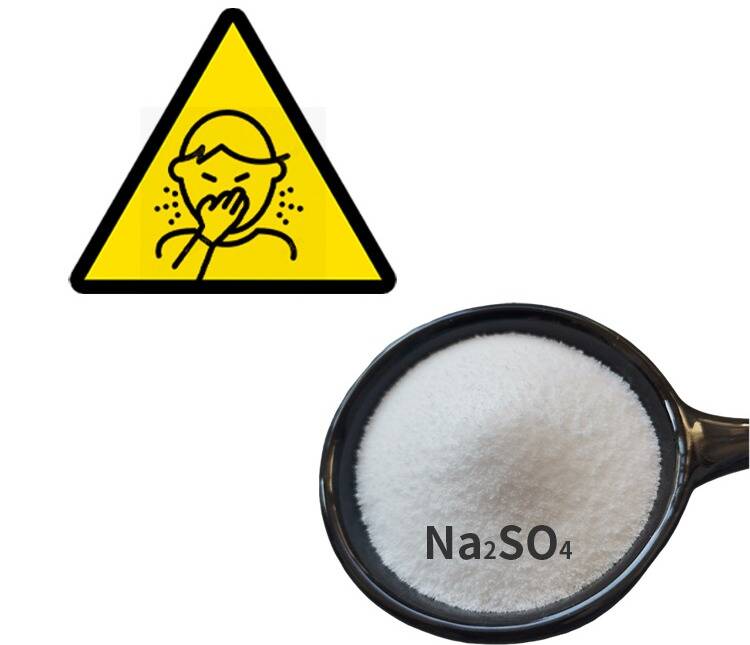
Sodium Sulphate — with the chemical formula Na₂SO₄ — is a vital inorganic chemical raw material. It appears as a white, odorless crystalline powder. It typically exists in two forms: anhydrous sodium sulphate — commonly known as Glauber’s Salt — and decahydrate sodium sulphate — commonly known as mirabilite. Among these, anhydrous sodium sulphate is the most widely used form in industrial applications.
Sodium sulphate possesses stable physicochemical properties. It is readily soluble in water. Its aqueous solution is neutral. It has a high melting point of 884°C. It exhibits excellent chemical inertness at elevated temperatures. These characteristics enable it to play an indispensable role across multiple industrial sectors. With a global annual production exceeding 15 million metric tons, it ranks among the largest‑volume inorganic salt products.
From a resource perspective, sodium sulphate is widely present in nature. It is primarily derived from natural minerals — such as mirabilite and glauberite — and as a by‑product of various chemical processes — including viscose fibre production, borax manufacturing, and chromate production. This diversified resource base ensures the stability of the global supply chain.
Core Application: The "Fining Agent" in the Glass Industry
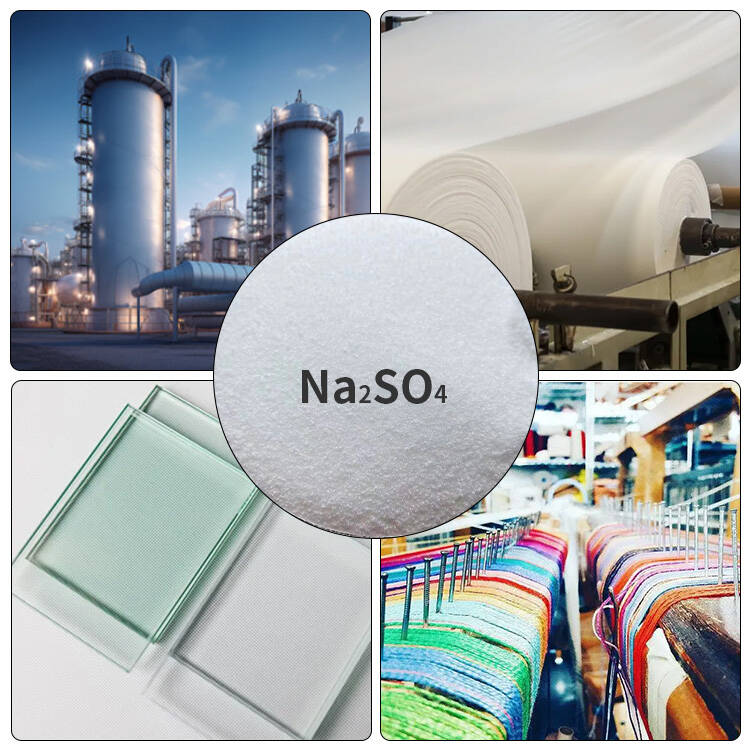
In the field of glass manufacturing, sodium sulphate holds a critically important position. It serves as a core additive in the production of flat glass, container glass, and various specialty glasses.
When added to the glass batch, sodium sulphate performs the following key functions:
Fining Agent Function: At the high temperatures of glass melting — approximately 1400‑1500°C — sodium sulphate decomposes to generate gases. These gases form larger bubbles that rise through the molten glass. They adsorb and remove smaller bubbles entrained in the melt. This process effectively eliminates bubbles from the glass — enhancing its transparency and homogeneity.
Fluxing Agent Function: Sodium sulphate forms low‑melting point eutectic mixtures with impurities in the silica sand — such as alumina. This accelerates the melting process of the glass batch. It reduces energy consumption. It also increases the production efficiency of the furnace.
Prevention of Segregation: Within the batch mix, sodium sulphate helps maintain the uniform distribution of raw materials. It prevents the segregation of components like silica sand and soda ash during transport and charging into the furnace.
Typically, in the production of soda‑lime glass, sodium sulphate constitutes approximately 8%‑12% of the total batch weight. It works in synergy with other auxiliary materials. Together, they collectively determine the quality of the final glass product.
Diversified Applications: Extending into Daily and Industrial Sectors
Beyond its primary application in the glass industry, sodium sulphate finds extensive use in numerous other sectors. This is due to its excellent properties.
Detergent and Textile Industry: It serves as a crucial filler in synthetic detergent formulations — typically comprising 15%‑40% of laundry powder composition. It helps control product flowability and prevents caking. In textile dyeing, it acts as an exhaustion agent. It facilitates the transfer of dye from the dye bath to the fibre — thereby enhancing dye uptake, particularly with direct and sulphur dyes for cotton.
Paper Industry: In the kraft pulping process, sodium sulphate is used as a cooking chemical. It is converted to sodium sulphide in the recovery cycle. This sodium sulphide participates in dissolving lignin — thereby separating the cellulose fibres.
Chemical Industry: As a fundamental chemical raw material, it is used in the production of other chemicals — such as sodium sulphide and sodium silicate.
Other Applications:
Construction Materials: As a component in concrete admixtures — promoting cement hydration under low‑temperature conditions.
Non‑ferrous Metallurgy: Used as a floating agent or smelting aid.
Pharmaceutical and Food Industries: In pharmaceuticals, it serves as a laxative. In the food industry, it is used as a food additive — within specific regulatory limits — for acidity regulation and as a carrier.
Product Forms and Quality Standards
To accommodate production requirements across different industries, sodium sulphate is typically classified based on purity and physical form. Our company can reliably supply the following mainstream specifications:
| Product Form | Purity Specification | Core Characteristics & Application Scenarios |
|---|---|---|
| Class I Glauber’s Salt | Na₂SO₄ ≥ 99.0% | High purity, excellent whiteness, extremely low water‑insoluble content. Suitable for demanding applications — such as precision chemicals, high‑grade synthetic detergents, and specialty glass manufacturing. |
| Class II Glauber’s Salt | Na₂SO₄ ≥ 98.0% | Mainstream industrial grade — offering high cost‑performance. Widely used in ordinary flat glass, container glass, conventional detergents, and the textile industry. |
| Class III Glauber’s Salt | Na₂SO₄ ≥ 97.0% – 95.0% | Suitable for applications with less stringent purity requirements — such as certain construction additives and basic chemical production. |
We strictly adhere to the national standard. We rigorously control key parameters — including main content, water‑insoluble matter, calcium and magnesium ion content, chloride content, and pH value. This ensures stable performance across various downstream applications.
Market Dynamics and Foreign Trade Opportunities
The global sodium sulphate market is characterised by relatively fragmented supply and demand. In recent years, the market landscape has exhibited several notable trends:
Shifting Demand Structure: While growth in traditional applications like detergents remains stable, the explosive expansion of high‑end glass sectors — such as photovoltaic glass and LCD glass — has significantly driven demand for high‑purity sodium sulphate. These industries impose extremely strict requirements on impurity levels — particularly iron and chromium.
Evolving Supply Landscape: China stands as the world’s largest producer and exporter of sodium sulphate. It possesses abundant natural mirabilite resources and mature by‑product recovery technologies. Chinese Glauber’s Salt — leveraging cost advantages and consistent quality — holds a dominant position in the international market. Customs data indicates that China’s annual export volume of Glauber’s Salt has long been maintained at 3‑4 million metric tons. It is primarily destined for Southeast Asia, South America, Africa, and Oceania.
Regional Demand Growth: Regions such as Southeast Asia, Africa, and the Middle East are experiencing sustained growth in demand for essential products — like glass and detergents. This is driven by accelerating infrastructure development and industrialisation. However, limited local production capacity creates significant reliance on imports. This presents substantial market opportunities for Chinese sodium sulphate exports.
Our Advantages
As a specialised foreign trade company dealing in chemical products, we offer more than just a reliable product source. We provide value‑added professional services:
Stable Supply Chain: We have established long‑term strategic partnerships with several major domestic sodium sulphate producers. This ensures priority supply even during peak seasons — and maintains consistent quality across batches.
Flexible Product Customisation: We can supply customised products tailored to specific customer requirements — such as low calcium or magnesium, or low iron specifications.
Professional Logistics Services: Given the large tonnage and moderate value of sodium sulphate, logistics cost is critical. We possess extensive experience in bulk vessel, container, and jumbo bag shipments. This enables us to provide optimal logistics solutions — minimising customers’ total procurement costs.
Rigorous Quality Control: Third‑party inspections — e.g., SGS, BV — are available prior to shipment. This ensures all product specifications meet export standards — providing customers with peace of mind upon receipt.
Conclusion
From everyday detergents to high‑end photovoltaic glass, sodium sulphate quietly yet critically underpins the operations of modern industry. As a specialised supplier deeply engaged in this field, we are dedicated to channelling China’s high‑quality sodium sulphate resources to clients worldwide. Whether you are an industrial user requiring bulk procurement or a distribution partner seeking a stable supply source, we commit to providing superior products and services — with professionalism and integrity. Please feel free to contact us — to explore potential cooperation.